Monday Morning Insight: In Memoriam

Today we celebrate Memorial Day. I hope you find today’s quote, from the Gospel of John, the fifteenth chapter, the thirteenth verse, fitting to start the week:

“Greater love has no one than this, that one lays down his life for his friends.”

On Memorial Day, of course, we remember those who laid down their lives in defense of the United States. They laid down their lives for their friends and family, yes; for their comrades in arms, certainly; but also for us. The freedom we enjoy was bought at a tremendous, terrible price, and we do well not to squander it.

A place for remembrance - Memorial Day

(Image: “A Place for Remembrance — Memorial Day,” by Wayne S. Grazio, on Flickr under Creative Commons.)


It seems a good day also to remember the last verse of “The Star-Spangled Banner,”

O thus be it ever when free men shall stand
Between their lov’d home and the war’s desolation!
Blest with vict’ry and peace may the heav’n-rescued land
Praise the power that hath made and preserv’d us a nation!
Then conquer we must, when our cause it is just,
And this be our motto — “In God is our trust,”
And the star-spangled banner in triumph shall wave
O’er the land of the free and the home of the brave.

To which I say, Amen.

So, enjoy this day — and I mean really enjoy it, find joy in it, take joy from it, share your joy with someone else — but spare a moment to reflect on the freedom we enjoy, and the price that was paid for it. It is precious, beyond measure, and we should use it well.

I hope you have a fantastic week.

Facebooktwitterpinterestlinkedinmailby feather

Monday Morning Insight: The Purpose of Our Government

On this date in 1788, my home state of South Carolina became the eighth state to ratify the new Constitution of the United States of America. Given the (perhaps unusually) contentious nature of our political discourse this election year, it seemed like a good idea to use the Preamble as today’s quote to start the week:

We the People of the United States, in Order to form a more perfect Union, establish Justice, insure domestic Tranquility, provide for the common defence, promote the general Welfare, and secure the Blessings of Liberty to ourselves and our Posterity, do ordain and establish this Constitution for the United States of America.

Break it down with me …

  • We the People of the United States … — Not we the people of one state, nor we the people of the rest of the world, but we the people of the United States.
  • … in Order to form a more perfect Union … — That is, “more perfect” than the previous union under the Articles of Confederation. (Many years ago, my good friend Dr. James Galt-Brown and I discussed writing a book to speculate on what the next more perfect union might be like. Alas, another project that fell by the wayside.)
  • … establish Justice … — Not guarantee justice, because justice can never be guaranteed, but establish it, primarily by establishing a system which, if administered well, might produce it more often than not. Justice as an ideal toward which we should strive is laudable, but a different matter from what the Constitution purposed.
  • … insure domestic Tranquility … — That is, keep the peace internally and, where possible, protect citizens’ lives from disruptions.
  • … provide for the common defence … — Note that this is the only thing the Preamble proposes to provide, and even here the preposition is important because it is less to provide outright than to provide for defense against our enemies. National security remains the paramount responsibility of every national government, but the government relies on the citizens — whether volunteers, as we have in the U.S. today, or conscripts in times of national emergency — to step up and provide it. That seems like a good thing to reflect upon as we approach Memorial Day.
  • … promote the general Welfare … — Not provide it, not guarantee it, but promote it: make the citizens’ welfare possible, and where practical remove obstacles to it.
  • … secure the Blessings of Liberty … — What are the blessings of liberty? What are the benefits of freedom? Are they the same for everyone, everywhere, at every time? No. The blessings may be success, but they may also be failure; potential good results of liberty also have their negations, potential bad outcomes, because exercising liberty means accepting risk.
  • … to ourselves and our Posterity … — Not to the rest of the world, unless they wish to join the union of our several and sovereign states. To ourselves, and the future generations we raise.

The first page of the U.S. Constitution. (Source: Wikimedia Commons.)


Our Constitution was not perfect when it was written, but it was not expected to be; it was only meant to be “more perfect.” Its authors were wise enough to include in it the means to change it should future years prove it unequal to its charge. And what was its charge, its mission? It seems to me it’s right there in the Preamble: not to institute a governmental system for its own sake, but to accomplish certain tasks that together would free its people — “We the People of the United States” — to pursue their own aims, their own dreams, their own potential.

As we begin this week, I hope you have success in pursuing your aims, your dreams, and your potential.

Facebooktwitterpinterestlinkedinmailby feather

Monday Morning Insight: the Importance of Persistence

Today’s quote to start the week comes from the 30th President of the United States, Calvin Coolidge:

Nothing in the world can take the place of Persistence. Talent will not; nothing is more common than unsuccessful men with talent. Genius will not; unrewarded genius is almost a proverb. Education will not; the world is full of educated derelicts. Persistence and determination alone are omnipotent. The slogan “Press On” has solved and always will solve the problems of the human race.

Say what you will about Coolidge, but he was a champion of individual liberty and responsibility. This quote posits that the individual who perseveres has a better chance for success than someone who relies only on other qualities. It’s not that success never comes to those who with little effort capitalize on their talent or genius or education, because it can and sometimes does; it’s not that success comes to those who persevere with little talent, genius, or education, because often it does not; but that the surest road to success is the long, hard road of consistent effort applying one’s proven talent, native genius, or accumulated education.

Persistence

(Image: “Persistence,” by Dave Bezaire, on Flickr under Creative Commons.)


Have you known anyone with talent who let their talent languish? Have you known anyone with genius — not as an estimate of intelligence, but as that almost spiritual inclination toward a particular field — who failed to put their genius to work? Have you known anyone who was highly educated but whose intellect was more highly developed than their work ethic? What might they have accomplished if their abilities and knowledge had been joined with diligent effort?

What might we accomplish, if we were more tenacious in pursuit of our goals?

So as you pursue your goals — as you put your talent, genius, and education into whatever you do — let this quote remind you that what will set you apart, what will make the difference, is whether you keep going, whether you persevere, whether you persist.

Press on!

Facebooktwitterpinterestlinkedinmailby feather

On A Day of New Beginnings, Starting Something New: Monday Morning Quotes

Thirty years ago today, I was commissioned a Second Lieutenant in the US Air Force and graduated from Clemson University with a bachelor’s degree in mechanical engineering.

That set me off on a series of adventures, during which I met and worked with some amazing people — maybe even you! The track of my Air Force career took some interesting turns, and the years since have been their own “long, strange trip.”

So as I look back at this day in my personal history, when the work I had done up to that point led to looking ahead to those adventures, I thought I’d start something new here on the blog. I ran this idea past my newsletter subscribers* and got more replies than usual, all of them saying that they thought I should do it. So today I’m starting a series of blog posts featuring quotes that may be interesting, inspirational, timely (in terms of historical commemorations or recent news), or just … odd.

I’m torn between calling it “Monday Morning Quotes” as in the post title above, or something like “Words to Start the Week.” (I’m open to suggestions.)

Why would I do this? For the simple reason that I love quotes. Over the years, as I’ve faced difficulties and decisions, I’ve turned to various bits of wisdom and lore I picked up along the way. Back in the days before cell phones, when I carried around a “Franklin Planner” (like many of my Air Force project manager brethren) to keep track of things I needed to do, one section of my planner included a printout of quotations called, appropriately and pedantically enough, “Words by which to Live and Work.” I’ve added to the file in the years since, though it stays on my computer these days.

So without further ado …

Words to start the week. To kick this off, I’ll use the quote I shared in my newsletter. It’s one of my favorite quotes from Science Fiction Grand Master Robert A. Heinlein, from his “Notebooks of Lazarus Long” (found in the novel Time Enough for Love):

A human being should be able to change a diaper, plan an invasion, butcher a hog, conn a ship, design a building, write a sonnet, balance accounts, build a wall, set a bone, comfort the dying, take orders, give orders, cooperate, act alone, solve equations, analyze a new problem, pitch manure, program a computer, cook a tasty meal, fight efficiently, die gallantly.

Specialization is for insects.

glowing human being

(Image: “glowing human being,” by J E Theriot, on Flickr under Creative Commons.)


I like that quote because I agree that we as people should strive to be well-rounded, to acquire new, varied skills and knowledge. I don’t think Heinlein’s specific list of abilities is as important as the idea that we are (and should be) generalists, even if some of us have specialties of a sort. I think many people bear this out in their lives without even thinking about it, when they work in one field but sustain other interests outside of work: the teacher who paints, the engineer who writes, the scientist who cooks; the nurse who maintains a motorcycle, the accountant who grows a garden, the programmer who plays an instrument.

I think I’ve mentioned in a previous blog post that if I had the time and energy to start another venture I’d establish a school that used that quote as the basis of its curriculum. In my dream school, students would learn life and family skills, survival skills, arts and sciences of all kinds, and above all that being human is itself a wondrous adventure with nearly boundless possibilities.

So take a moment, in the spirit of that quote, and consider some of the things you can do. Maybe you can check off a lot of the items Heinlein listed; maybe you could add a dozen more items that didn’t make his list; maybe you can do both. Regardless, I hope you can take some time to appreciate just how gifted and how skilled you are — and if the world sometimes calls your attention to the things you can’t do, I hope today you can concentrate on the things you can do. And do them.

Have a great week!

___
*Yes, I send out a newsletter from time to time. If you’d like to get it, you can sign up using the form in the sidebar on the right side of this blog or at this link.

Facebooktwitterpinterestlinkedinmailby feather

The Pleasure of Watching a Professional … Speak

From my perspective as a speechwriter, Dave Ramsey is a confident and effective public speaker. It was a pleasure to watch him work this week.

I went to two of his events, and both were extremely well done. If you haven’t heard of him, Dave Ramsey is a bestselling personal finance author, with a syndicated radio show during which he counsels people on getting out of debt. He employs over 500 people at Ramsey Solutions, which provides products and services to help people manage money and build wealth.

(Dave Ramsey.)


My science fiction friends (and SF fans in general) might particularly appreciate the Ramsey philosophy, as part of it accords with one of Robert A. Heinlein’s aphorisms from “The Notebooks of Lazarus Long” (found in Time Enough for Love):

Sovereign ingredient for a happy marriage: Pay cash or do without. Interest charges not only eat up a household budget; awareness of debt eats up domestic felicity.

But as much as I appreciated the content of the two events — how to succeed in business and build personal wealth by hard work and the old-fashioned notion of spending less than you earn (which I understand intellectually but struggle with in terms of paying down our debts and overcoming my own bad habits) — I also appreciated the events from a public speaking perspective. Mr. Ramsey was not the only speaker, but he was clearly the most accomplished; it was easy to see, for instance, that the youngest of the speakers still has room to grow, but he has a great example to follow.

Specifically, public speakers can learn several lessons from him:

  • Authenticity. He doesn’t try to sound like someone else, and therefore he comes across as authentic and sincere. At one point he alluded to not being able to do a particular accent, and he didn’t try just to prove the point. And when he told a story about Winston Churchill and quoted one of the Prime Minister’s speeches, he didn’t try to sound like Churchill. He was himself, which is exactly what the audience wanted.
  • Simplicity. Not in terms of the stage, because the big screen and the lights and such were not exactly simple, but in terms of having a consistent message that he reiterated often. He employs some pithy lines at times — “debt is dumb, cash is king” is one of his taglines — but the illustrations he used were on point and he brought everything back to the central theme again and again.
  • Variety. He used a variety of visual aids, from movie clips (for which I’m sure he paid a royalty) to slides to physical objects, all of which helped to keep the audience’s attention. In terms of his slides, I wish some of my old clients could have seen how few slides he used! He used the slides and other aids sparingly, to make specific points — he didn’t rely on them. More often than not, the only thing on the screen was the title of the event.

When the Tuesday event was over, I happened to be standing at the door of his hotel when he got there. I waved and said, “Nicely done today,” not wanting to intrude too much on his time — then he stopped long enough to shake my hand and thank me for coming, which I thought was very gracious. (His assistant gave me the side-eye, though, and acted as if he wanted to hustle Mr. Ramsey into the building; I think he was afraid I was going to pull out my phone and try to snag a picture.)

One final note on the public speaking aspect: I very much appreciated something Mr. Ramsey said during the Tuesday event. He was lauding his AV team and explaining that he never worries about how things are going to run or how they will sound when he shows up to do his sound check, and then he made a point that I wish some of my old clients could have heard: he said he always runs through his slides even if he’s given that presentation many times before, because he’s a pro.

Yes, indeed. If you’re a public speaker, take some cues from a professional like Dave Ramsey: be authentic, keep the overall message simple and clear, employ a variety of visual aids, and practice.

___
P.S. If you or someone you know needs help developing a speech for a big event, get in touch and let’s see if I can help. My aim as a speechwriter is to help my clients sound like their most authentic selves, and to tailor their messages so they resonate with the audience.

___
For more information on Dave Ramsey and Ramsey Solutions, visit https://www.daveramsey.com.

Facebooktwitterpinterestlinkedinmailby feather

Tax Awareness Day, Spring Edition

It’s the Ides of April! Have you paid your taxes?

I don’t mean filed your taxes for 2015, although you might have done that, too. Maybe you’re expecting a refund; maybe you already got one; maybe you have to pay.

But even though April 15th falls on a Friday this year, which gives you a three-day reprieve on filing your annual taxes, today still represents Tax Day — and the day first-quarter estimated tax payments are due for this tax year.

If you don’t make your own tax payments — for instance, if you have taxes withheld from your paycheck or someone else takes care of your taxes for you — you might not have a good grasp on just how much you’ve paid in 2016. Those of us who pay quarterly estimated tax ourselves know all too well, whether we paid the first of four set payments based on our expected earnings or we paid according to what we actually made so far (projected out through the end of the year).

Tax Day

(Image: “Tax Day,” by Simon Cunningham, on Flickr under Creative Commons.)


If you haven’t had the pleasure this year of writing a check — either electronic or paper — to the government for your 2016 taxes, then today is a good day to take a look at the last pay statement you received in March. Check out the “year to date” figures of how much you made and how much was taken out. Depending on whether you think it was too much or too little or just enough, you can either think about all the good things the government is doing with your money … or the things you could’ve done, if you could’ve kept a little more of it.

Facebooktwitterpinterestlinkedinmailby feather

Ladies, Stand Your Ground

Warning: Controversy Ahead.

I wrote this a couple of months ago, after considering the notion for many more, but there never seemed to be a good time to post it. I thought about posting it when I heard that someone was planning a rally in support of legalizing rape; I’m still not sure if that was a real thing, but it seemed a monumentally stupid idea — what next, rallies to legalize robbery and burglary and other crimes? Then a GOP Presidential hopeful mentioned abortion in the context of self-defense against incest or rape, and was criticized for it, and now another made thoughtless, asinine comments about punishing women who have abortions.

Maybe there is no good time to post something like this.

This post is about self-defense, and abortion. I advise you to leave now if you don’t want to be offended, because something I say here will almost certainly offend you — no matter where you stand on these issues.

Use of Deadly Force Authorized

(Image: “Use of Deadly Force Authorized,” by Brian Reynolds, on Flickr under Creative Commons.)


First, an observation: I believe the decision to abort a baby must be one of the most difficult decisions a human being may ever make. I do not intend to second-guess anyone who has made that decision, nor do I intend to criticize or vilify them.

Second, another observation: I recognize that some people believe that I should not express my opinion on abortion (or perhaps even that I should not form an opinion) because I am a man and not a woman. Obviously, I disagree.

Now, to the root of the matter: It seems to me that, regardless of one’s personal views on either issue, logical consistency requires that our view of abortion should align with our view of self-defense, especially where the latter is covered by various “stand your ground” laws. To that end,

  • It appears logically inconsistent to support using deadly force in self-defense — often related to “stand your ground” laws — and at the same time oppose abortion.
  • It appears logically inconsistent also to support abortion and at the same time oppose using deadly force in self-defense.
  • Logical consistency would seem to require either supporting both, or opposing both, abortion and using deadly force in self-defense.

I do not think it is necessary to like self-defense killing or abortion, or to be in favor of or advocate either one, in order to recognize that they rest on the same premise: that we have the right to defend our lives and property using force, up to and including deadly force.

If a homeowner has the right to use deadly force to protect their life and property, or the lives of others in the home, then a woman has the right to use deadly force to protect her life and person — say, in the case of defending herself against rape. By extension, a pregnant woman has the right to use deadly force against an attacker if her baby is threatened. But in a similar fashion a pregnant woman also has the right to use deadly force against her unborn baby — to remove it from life-support, if you will — if she believes that the baby poses a threat to her life and/or person.

Coming at the issue from the other direction, if a pregnant woman has the right to use deadly force — or, in the case of a seeking an abortion, to contract for the use of deadly force — to protect her life, her lifestyle, or her property, then homeowners or citizens have the right to use deadly force to protect their lives or property or the lives or property of those they love. However, if a pregnant woman has no such right, then neither does anyone else have the right to defend themselves against threats of violence or loss.

Self-defense, after all, is based on the individual’s perception of the threat. The threat may be direct or indirect, and perceptions may be clouded by a variety of factors, but the decision to act or not rests with the person who is threatened at the time the threat presents itself. We may, from a different perspective or at a different time, disagree with the homeowner or the pregnant woman on the degree of the threat; or we may disagree with the decision they made when faced with the threat; but the decision was theirs at that time, not ours at some other time. And to support one and refuse to support the other appears to me to be logically inconsistent.

We can make a similar case about abortion and the death penalty. That is, we can make the case that if the death penalty is a just punishment for certain crimes, enacted after weighing the evidence and coming to a verdict, then abortion may be considered as a death penalty in itself, with the potential mother as judge and jury, possibly as both prosecution and defense, and in some tragic cases even as executioner. For me, that is a much more difficult concept (and following it too closely may lead to considering abortion as a form of justifiable homicide), but I still can consider it somewhat equivalent.

I say “somewhat equivalent” deliberately: I do not mean to say that killing in self-defense is exactly equivalent to abortion, only that they are similar. (Others have tackled that subject in far more depth than I can here, as noted at the end.) One case is more often a quick-reaction response compared to the other. One is more often a direct confrontation than the other. One clearly involves acting against an agent capable of independent thought and action. On that score, advocates of abortion often argue that the unborn child, by virtue of being fully dependent on the mother, should not be considered fully human; rather than argue that matter here, except to note that such a dehumanizing mentality is something pro-abortion advocates have in common with armies facing enemies, it seems clear that an unborn child at the very least has the potential to grow into an independent agent (as the pregnant woman was considered above a potential mother). On that basis, we can say that both self-defense killing and abortion involve terminating with prejudice the future potential of a human person.

Again I must emphasize that it is not necessary to prefer or to approve of either of these mechanisms. It is possible to wish for every unborn child to be wanted and to be cared for, in utero and beyond, just as it is possible to wish that there might be no thugs, no rapists, no burglars, no threats against people’s lives, persons, or property. Wishing for these things, however, does not make them come to pass, and so we are faced with difficult decisions that have far-reaching consequences.

Therefore, as someone who supports the right of an individual to protect their person and property with any means at their disposal, up to and including deadly force — whether homeowners defending themselves against burglars or women defending themselves against rapists — I must support the right of any woman to protect herself against an unborn life she is supporting if she feels threatened by it, up to and including the use of deadly force. Ladies, stand your ground.

I do not have to like it. I may wish for any number of alternatives. But it seems to me that I cannot support one and not the other without being logically inconsistent.

I could be wrong.

___
Some Notes:
1. The first GOP contender alluded to above was Chris Christie. See Chris Christie Faces Criticism for Saying Aborting a Baby After Rape is “Self-Defense” for Women. The second was Donald Trump, in his more recent MSNBC interview that, as much as it presented his egregious thinking on the subject, lent credence to the idea that he thinks very little of Republicans and is merely playing at being one.
2. The idea of abortion as self-defense was discussed in 1971 by Judith Jarvis Thomson in her article “A Defense of Abortion” in
Philosophy & Public Affairs. She wrote, “I should perhaps stop to say explicitly that I am not claiming that people have a right to do anything whatever to save their lives. I think, rather, that there are drastic limits to the right of self-defense…. But the case under consideration here is very different. In our case there are only two people involved, one whose life is threatened, and one who threatens it. Both are innocent: the one who is threatened is not threatened because of any fault, the one who threatens does not threaten because of any fault. For this reason we may feel that we bystanders cannot interfere. But the person threatened can. In sum, a woman surely can defend her life against the threat to it posed by the unborn child, even if doing so involves its death.” The entire article is online here and elsewhere.
3. This short BBC article also covers the topic of abortion as self-defense.
4. A Harvard Law blogger asked in a 2012 entry, Is the Self Defense Exception Consistent with the Belief that a Fetus is a Person? Their conclusion was that “the belief that a fetus is a person with the full complement of rights leads to uncomfortable positions in relation the self-defense exception.” Indeed.
5. The tendency of armies to dehumanize the enemy, in order to make it easier to kill them, was covered quite well by Robert O’Connell in
Of Arms and Men.

Facebooktwitterpinterestlinkedinmailby feather

Do You Prefer Your Socialism Voluntary, or Mandatory?

Recently there’s been a lot of social-media talk about socialism, what it is and what it isn’t, if for no other reason than one of the candidates to be the Democratic nominee for the Presidency is a self-described Socialist.

Now, before we get to the question posed above: in the hopes of improving communication let’s take a moment to define a few terms. At the very least, we might ensure that we are not confusing socialism with other -isms. According to the online version of Webster’s:

  • socialism is “any of various economic and political theories advocating collective or governmental ownership and administration of the means of production and distribution of goods”
  • communism is “a theory advocating elimination of private property; a system in which goods are owned in common and are available to all as needed”
  • capitalism is “an economic system characterized by private or corporate ownership of capital goods, by investments that are determined by private decision, and by prices, production, and the distribution of goods that are determined mainly by competition in a free market”
  • fascism is “a political philosophy, movement, or regime (as that of the Fascisti) that exalts nation and often race above the individual and that stands for a centralized autocratic government headed by a dictatorial leader, severe economic and social regimentation, and forcible suppression of opposition”
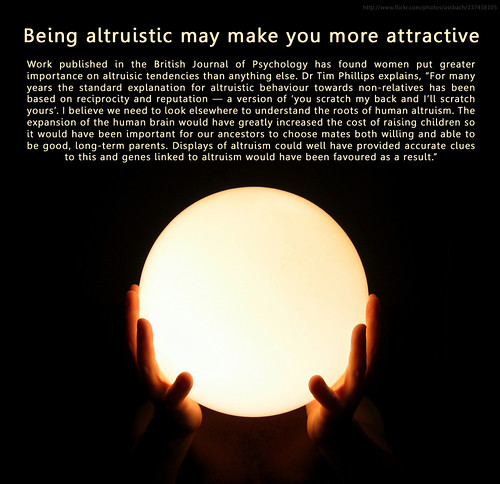
  • altruism is “unselfish regard for or devotion to the welfare of others”

From the dictionary definition, it would seem as if there could be no such thing as “voluntary” socialism except in the context of voluntary adherence to the dictates of government and collective society. But socialism seems to have come to mean something different in common usage, which is why I included altruism among the defined terms.

So far as I can tell, a lot of the people who advocate for socialist policies do so out of personal altruism — i.e., out of concern for others’ welfare — and not because they believe that the government or other collective entities should own and operate factories and businesses. That is, in some respects “little-s” socialism has come to be understood in terms of social action (or even social “justice”) and thereby in terms of caring for members of society, as opposed to its dogmatic, collectivist big brother: systematic, capital-S Socialism. In other words, from what I’ve observed some people look at socialism not as an economic theory, but as a form of human tribalism (defined by Webster’s as “tribal consciousness and loyalty; especially, exaltation of the tribe above other groups”) where the “tribe” consists mainly of the downtrodden as opposed to the related.


altruism makes you more attractive

(Image: ” altruism makes you more attractive,” by Will Lion, on Flickr under Creative Commons.)


In this manner of thinking of socialism, the question posed in the title distinguishes between two possible modes of implementation: voluntary or mandatory.

The first is voluntary socialism, practiced primarily through personal social action: giving of one’s excess treasure, time or talent to help the less fortunate. This is the socialism of charity, of personal altruism, of expressing one’s individual concern for one’s fellow man by actually doing something — writing a check, building a house, cooking a meal. This is the socialism of the soup kitchen, the homeless shelter, the sanctuary.

The second is mandatory socialism, practiced primarily through government-led social action: empowering the government to take everyone’s (and particularly other people’s) excess — most readily in the form of treasure — to help the less fortunate. This is the socialism of confiscation, of redistribution, of assigning responsibility to the government to take care of one’s fellow man and thus absolving oneself of the need to act. This is the socialism of the tax office, the entitlement check, the welfare line.

So, do you prefer your socialism to be voluntary, or mandatory? Do you prefer to volunteer your contributions to social action, or to be made to contribute to it?

Generalizations always exclude those who do not fit them, but I have observed that, in general, many people who regularly practice voluntary social action oppose mandatory social action, and many people who promote mandatory social action don’t seem to engage in much voluntary social action (other than perhaps organizing people into promoting more mandatory social action). That is, many people who frequently donate their time or money to charities they deem worthy oppose efforts to empower the government to exact donations from them, and many people who support the idea of the government providing and expanding all of the social safety nets do not often seem quick to engage in personal acts of charity. I find that curious, but I admit my observations are limited and perhaps flawed.

But which do we emphasize: the voluntary, or the mandatory? As with most dichotomies of this sort, most continua, I think that everyone favors a little bit of volunteer action and a little bit of mandatory contribution. I’m not sure I’ve ever met someone so dyed-in-the-wool that they did not accept some of the alternative approach. (Perhaps the one Trotskyite I’ve met, though we have not discussed this in any depth. Perhaps a Libertarian or two.)

When we emphasize the voluntary, we allow ourselves to practice socialism — to contribute to social action — to the degree we feel comfortable, and we allow others also to practice it (or not) to whatever degree they want.

But when we emphasize the mandatory, we may ourselves end up practicing socialism to our preferred degree but we almost certainly require that others practice it to a greater degree than they feel comfortable. And when we enforce contribution through coercion via the rule of law, we should not be surprised when those others bristle, and balk, and even prepare for battle.

Where do you fall on the continuum between voluntary and mandatory contribution? If you tend to take the burden of helping others onto your own shoulders, with no thought of reward and no expectation of other people pitching in, then you probably fall closer to the voluntary side. If you sometimes think “someone ought to do something about that” and sometimes think “can I do anything about that,” then you probably fall somewhere in the middle. But if you tend to think “those other people ought to do more to help” more than you think “what can I do to help,” then you probably fall closer to the mandatory end.

I’m not here to pass judgment; in the end, I think in some way we will all pass judgment on ourselves. But I know who I’d rather have as my neighbors, if I ever find myself in a pinch. And I know what kind of neighbor I’d like to be.

Facebooktwitterpinterestlinkedinmailby feather

So, I Saw a Car on Fire …

Yesterday, on my way home from the MystiCon science fiction and fantasy convention — which went very well — I came around a bend on I-40 and saw a car on fire, and a young man pulling items out of the vehicle.

I was the first person to pull over, and by the time I got out of my truck the little car was completely engulfed in flames. The young fellow had stopped trying to retrieve his belongings because the fire was too intense. I dialed 911 on my cell phone, but I couldn’t pinpoint the location for the operator because the only nearby sign was obscured by trees. The driver was also on the phone with the dispatchers by that time, so I rang off.

In the next few minutes, two more cars had stopped to see if they could help. Thankfully, the young man was unhurt, but here’s what his car looked like when it was all over:

(Thankfully, the young man driving this car was not hurt when it caught fire.)

Turns out the driver was headed toward Raleigh in search of construction work. I offered to drive him into Raleigh — it wouldn’t be that much out of my way, and seemed better than having the Highway Patrol drop him off at a gas station — but he couldn’t raise any of his friends on the phone and they didn’t respond immediately to his text messages. So he decided to head back to Pilot Mountain, where he had come from … and I agreed to take him. (I thought about buying him a bus ticket, but a quick search showed it would cost more for that in my money and his time than it would to drive him.)

When we got him and his few remaining things in the truck, I warned him that he’d have to listen to the “old man music” I had on CDs. He didn’t seem to be bothered by that.

We made a quick pit stop, where he wouldn’t let me buy him anything to eat or drink, then we headed west. I tried to make small talk, but between the turmoil of the event and still trying to reach his friends he wasn’t very talkative. (I can relate to that, since I’m not usually very talkative either.) Then, as we were coming up on the outskirts of Greensboro, one of his friends finally called him on the phone.

They said they could come get him, but because they would be coming from the east side of Raleigh we turned around and headed back east. We talked about a number of different places he might tell them to meet him and finally agreed on a suitable spot. By the time we got there, we had listened to the first Hootie and the Blowfish CD, the first Kutless CD, and about a fourth of the Cruxshadows’ Dreamcypher CD. He never commented on my eclectic taste.

When we stopped and unloaded, he offered to reimburse me for gas. Of course I refused and told him to pay it forward when he could. If I’d had more presence of mind, though, I would’ve found some sneaky way to slip a few dollars into his backpack for him to find later. I’ve kicked myself for missing that opportunity.

In the end, I made it home from the convention a few hours later than expected, but I made it home. I didn’t mind the delay; as I told one of the state troopers, if one of my children were in that situation, I hope someone would offer them a ride, too. I just hope that young fellow finds his way to a good place, finds the construction job he wanted, and bounces back quickly from this temporary setback.

Facebooktwitterpinterestlinkedinmailby feather

Tax Awareness Day, Winter Edition

Beware the Ides of January! It’s tax-time again.

Those of us who pay quarterly estimated taxes had to make our final 2015 payment today. Maybe you paid a set amount each quarter, based on your expected earnings, or maybe (like me) your income varies month-to-month and you paid your estimated taxes according to what you actually made. Maybe you paid electronically, as I did, or maybe you actually wrote out a check. Regardless, you probably know exactly how much you’ve paid to the government for 2015.

Tax Bill
(Image: “Tax Bill,” by 401(K) 2012, on Flickr under Creative Commons.)

If you haven’t had the pleasure of making your own tax payments — for instance, if you have taxes withheld from your paycheck or otherwise have someone who takes care of all that for you — you might not have a good grasp on just how much you’ve paid. So today is a good day to take a look at the last pay statement you received in 2015, and really pay attention to the “year to date” figures of how much you made and how much was taken out.

I’m not using this post to advocate for lower or higher taxes. It’s up to you to decide whether what you paid was too much, not enough, or possibly right about what you think it should have been. But you won’t be able to evaluate that until you look at how much it was — not how much you’re likely to get back in a refund this year, if any, but how much you actually paid into the system last year.

I only want folks to be aware of how large their tax burdens are. So take a look: Maybe you’ll be surprised.

Facebooktwitterpinterestlinkedinmailby feather