The Power of a Single Thought

I had a dream last night, but I can’t remember anything about it because in that tenuous state between sleeping and waking I had another thought — specifically, an idea related to a short story I plan to write — and that thought drove every vestige of the dream from my mind.

And, in the process, it impressed upon me the power of a single thought: that it only takes one single thought to crowd out all other thoughts. One single thought, if we concentrate strong enough on it or if we find it sufficiently compelling, will color our perceptions and bind us in mental chains.

I admit that this observation is not really new or particularly profound — others have pointed out our tendency to hold on to and defend various ideas in the face of contrary evidence — but it hit me this morning in a powerful way.

Consider this: complete each of the following sentences with the first thing that comes into your mind.

  • Hillary Clinton is a __.
  • Donald Trump is a __.
  • Gary Johnson is a __.
  • Jill Stein is a __.

Locked and Loaded

What strong chains we forge to bind our thinking! (Image: “Locked and Loaded,” by Thomas Hawk, on Flickr under Creative Commons.)


Was your first thought about each of them positive, negative, or neutral? It likely depended on where you fall along the political spectrum and, in the case of the Libertarian and Green party candidates, whether you know much about them at all.

Now, consider each of the following statements that may be considered observable facts:

  • Hillary Clinton is a lawyer.
  • Donald Trump is a businessman.
  • Gary Johnson is a businessman.
  • Jill Stein is a doctor.

How do you react to those simple statements about the career paths of the candidates, based on your first thought about each of them? Do you find that the first thing that came to mind earlier influenced your reaction to the next thing that was presented?

It seems to me that those first thoughts become our filters, the lenses (rose-colored or otherwise) through which we see the world. The first thought, especially if it conveys a value judgment, becomes, if you will, a self-fulfilling mental prophecy.

This applies to more than just politics, of course, but the political example occurred to me this morning because it’s particularly timely. In some respects this tendency is wired into the way we think and learn: according to Theory of Knowledge, we form concepts and then test those concepts against reality, but sometimes our concepts affect how we perceive reality. As a result, I’m not sure any of us can (or if it would even be desirable to) remain completely objective, with neutral impressions of everything. We are not Vulcans, after all.

But maybe, if we recognize this mechanism in our own thinking, we can be a bit more accepting, a bit more forgiving, not by rejecting our first thought or convincing ourselves that our first thoughts are wrong, but simply by recognizing that our first thought may be incomplete.


Facebooktwitterpinterestlinkedinmailby feather

Monday Morning Insight: the Goal of Writing a Book

(Another in the continuing series of quotes to start the week.)


In my college years, I read a lot by James Clavell (who was born on this date in 1924), and particularly enjoyed Shogun, Noble House, and King Rat, which was inspired by Clavell’s experience as a prisoner of war in Changi Prison in Singapore in World War II. Later, I discovered his translation of Sun Tzu’s The Art of War, the introduction to which is well worth reading even if you are already familiar with Master Sun’s masterwork.

Clavell was born in Sydney, Australia, as Charles Edmund Dumaresq Clavell. He eventually became a naturalized U.S. citizen after settling in California, where he was the screenwriter for the classic science fiction film The Fly (among other notable films). Quite an amazing man!

In a 1986 interview, Clavell said:

… the goal of writing any book is to create the illusion that what you are reading is reality and you’re part of it.

I love that quote, and try very hard in my own writing to make my fiction seem realistic. Whether I ever succeed, of course, is up to my readers to decide.

Keep Calm and Read a Book

Even if you don’t read my book — which I would appreciate — I hope you can find the time to read some good books! (Image: “Keep Calm and Read a Book,” by Robert Burdock, on Flickr under Creative Commons.)


In that same interview, Clavell also said,

All stories have a beginning, a middle and an ending, and if they’re any good, the ending is a beginning.

That’s another thing to strive for, I think: to make the end of a story a jumping-off point for other stories. Not necessarily sequels, and not even necessarily stories that will be written, but stories that the reader can imagine because the characters and the situations seemed real and resonated.

I can only hope that my fiction achieves those things.

Speaking of which, my newest story, “We Side With the Free,” is coming out in the November issue of Analog Science Fiction and Fact. If you read it, or anything else I’ve written, let me know how you think I did with respect to Clavell’s advice.

Facebooktwitterpinterestlinkedinmailby feather

Monday Morning Insight: Proclaiming National Thanksgiving

(Another in the continuing series of quotes to start the week.)


On this date in 1789, President George Washington — based on a resolution passed in the Congress — proclaimed that Thursday, 26 November 1789, would be set aside for the people of the nation to unite in devotion to “the service of that great and glorious Being who is the beneficent Author of all the good that was, that is, or that will be.” The proclamation began with a statement that seems quite bold today, especially for a public official:

… it is the duty of all nations to acknowledge the providence of Almighty God, to obey His will, to be grateful for His benefits, and humbly to implore His protection and favor.

Congress had recommended “a day of public thanksgiving and prayer, to be observed by acknowledging with grateful hearts the many and signal favors of Almighty God.” Washington’s proclamation enjoined the people to offer “sincere and humble thanks” to God for several things, including:

  • “His providence in the course and conclusion of” the Revolutionary War,
  • “the great degree of tranquillity [sic], union, and plenty” they enjoyed,
  • “their civil and religious liberty,” and
  • “all the great and various favors which He has been pleased to confer upon us.”

Gratitude changes the way we look at the world

(Image: “Gratitude changes the way we look at the world,” by BK, on Flickr under Creative Commons.)


President Washington also encouraged the people to beseech “the great Lord and Ruler of Nations” to forgive “our national and other trangressions [sic],” and, in particular,

to render our National Government a blessing to all the people by constantly being a Government of wise, just, and constitutional laws, discreetly and faithfully executed and obeyed.

It seems a shame that we have let our government get so out of control, and that we seem unable to place people in positions of trust who are wise and just, who respect the Constitution, and who are able to “discreetly and faithfully” execute the nation’s laws. Perhaps if we used Thanksgiving for giving thanks, and for reflecting on our freedom and what it takes to maintain it, we might have less trouble in that regard.

___
P.S. The full proclamation is available here.

Facebooktwitterpinterestlinkedinmailby feather

Monday Morning Insight: the Educated Electorate

(Another in the continuing series of quotes to start the week.)


It may do little to improve your Monday to remind you that tonight is the first Presidential debate of the 2016 election. Here’s something to think about as the debate looms, from a letter written this week in 1820 by Thomas Jefferson:

I know no safe depository of the ultimate powers of the society but the people themselves; and if we think them not enlightened enough to exercise their control with wholesome discretion, the remedy is not to take it from them, but to inform their discretion by education. This is the true corrective of abuses of constitutional power.

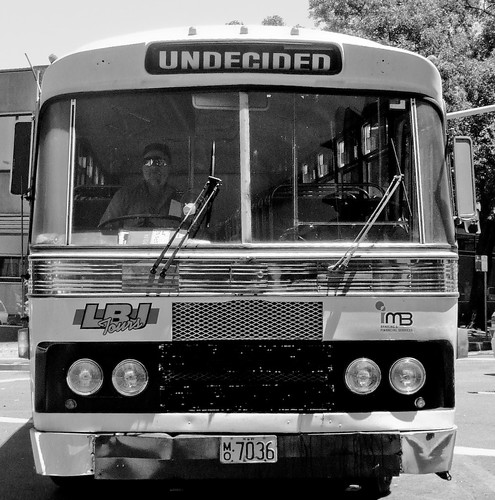
undecided

A photographer spotted this bus in Australia. I feel as if I’m riding it to the end of the line. (Image: “undecided,” by Vanessa Pike-Russell, on Flickr under Creative Commons.)


In other words, YOU and I are the “safe depository of the ultimate powers of the society” in which we live. Our government is not, because everyone can point to one or another excess of the government in which it abused its power and curtailed citizens’ liberties. As individuals, we have much less power and inclination to interfere in the lives of our fellow citizens; our government, on the other hand, seems to have little better to do than to interfere in all our lives.

For us to exercise our control over the government and the powers we grant to it — “with wholesome discretion,” as Jefferson wrote — we need to educate ourselves. And if we fail to do so, and allow the government to abuse its power further and so erode ours, then we have ourselves to blame.

Enjoy the debate!

___
P.S. If anyone is interested, I’ll try to compile a post or two about how I would answer tonight’s debate questions.

Facebooktwitterpinterestlinkedinmailby feather

Monday Morning Insight: a Pirate’s Repentence

(Another in the continuing series of quotes to start the week.)


Since today is International “Talk Like a Pirate” Day, this week’s quote comes from an actual pirate — albeit an anonymous one — who said, when asked if he repented of his crimes:

Yes, I do heartily repent. I repent I had not done more mischief; and that we did not cut the throats of them that took us, and I am extremely sorry that you aren’t hanged as well as we.

The quote is from the 1724 book, A General History of the Pyrates, also known as A General History of the Robberies and Murders of the most notorious Pyrates. The book was published under the name Captain Charles Johnson, thought to be a pseudonym of either Daniel Defoe or Nathaniel Mist.

Bbeard Sword.jpg

(Image: Blackbeard [Edward Teach], from an engraving by Benjamin Cole, in the 1724 General History. From Wikimedia Commons.)


I don’t think the quote above needs much in the way of interpretation. At least one pirate was not big on repentance or remorse, that much is clear. Whether that was representative of all pirates, I’m not sure … but, probably.

Happy mischief-making!

___
P.S. For fun, here are a couple of pirate-y things from friends of mine:
– Jonah Knight’s Pirate Song
– Marc Gunn’s new CD, Pirates Vs. Dragons
– Tom Smith’s Talk Like a Pirate Day

Facebooktwitterpinterestlinkedinmailby feather

Monday Morning Insight: “We Choose to Go to the Moon”

(Another in the continuing series of quotes to start the week.)


On this date in 1962, President John F. Kennedy delivered what has become known as the “Moon speech” at Rice University. Perhaps the most famous passage of the speech is:

We choose to go to the moon. We choose to go to the moon in this decade and do the other things, not because they are easy, but because they are hard, because that goal will serve to organize and measure the best of our energies and skills, because that challenge is one that we are willing to accept, one we are unwilling to postpone, and one which we intend to win….

To the Moon

(Image: “To the Moon,” by Alex, on Flickr under Creative Commons.)


It really is a marvelous speech — I say that as a speechwriter as well as someone who has always been inspired by the thought of going to the moon — and you can read it in its entirety at this NASA page.

In particular, I like the fact that Kennedy clearly understood that the Moon could be the first destination, the first waypoint, the first step in the larger endeavor of exploring space and establishing a presence there. Consider this part, that comes a few paragraphs before that famous passage:

… man, in his quest for knowledge and progress, is determined and cannot be deterred. The exploration of space will go ahead, whether we join in it or not, and it is one of the great adventures of all time, and no nation which expects to be the leader of other nations can expect to stay behind in the race for space.

Those who came before us made certain that this country rode the first waves of the industrial revolutions, the first waves of modern invention, and the first wave of nuclear power, and this generation does not intend to founder in the backwash of the coming age of space. We mean to be a part of it — we mean to lead it. For the eyes of the world now look into space, to the moon and to the planets beyond, and we have vowed that we shall not see it governed by a hostile flag of conquest, but by a banner of freedom and peace.

Kennedy, of course, was talking about his generation: the “greatest generation,” as Tom Brokaw called it, the generation that volunteered for, fought, and won World War II and then came home and built this nation into an economic juggernaut. The question this raises for me is whether our current generation is prepared to carry on in that tradition — whether we are “determined and cannot be deterred,” whether we have such grand dreams and bold visions and the courage to pursue them.

I hope so.

Facebooktwitterpinterestlinkedinmailby feather

Monday Morning Insight: John Locke on Reading and Thinking

(Another in the continuing series of quotes to start the week.)


This week’s quote comes from English philosopher John Locke, who was born on this date in 1632 and whose theory of government influenced the Founding Fathers of the United States, especially in the run-up to the Revolutionary War.

Locke died in 1704, and his Of the Conduct of the Understanding was published posthumously in 1706 and included this passage:

This is something that I think people who read a great deal are apt to be wrong about. Those who have read about everything are thought also to understand everything; but it is not always so. Reading provides the mind only with materials of knowledge; thinking makes what we read ours. It is not enough to cram ourselves with a great load of literary collections; unless we chew them over again—like a cow chewing its cud—they won’t give us strength and nourishment.

Here I make a confession: my own reading is often wide and shallow, and not nearly as deep as I would like or perhaps as it should be. And because I read widely I suppose I might be considered one of “Those who have read about everything” and “are thought also to understand everything” but don’t. What’s more, I’m probably the only one who thinks I understand; I expect most everyone else sees through my pretense.

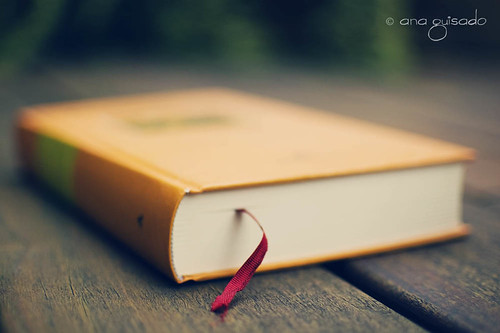
My favourite book

(Image: “My favourite book,” by Ana, on Flickr under Creative Commons.)


I’m convicted by this quote, then, because I don’t practice it as I should. Particularly this part: “Reading provides the mind only with materials of knowledge; thinking makes what we read ours.” I’d like to put that into practice more consistently, but I feel so many things tugging at my time that I skim things rather than scanning them, and I reserve little time to think deeply about what I’ve read.

So this week I hope to take time to really think about the things I read for my own edification, whether online or in print. (That won’t be easy, with Dragon_Con just a few days away, but I’m going to try.)

Wish me luck!

___
P.S. If you’re interested, here’s a link to Locke’s Of the Conduct of the Understanding.

Facebooktwitterpinterestlinkedinmailby feather

The Ideal, the Reality, and the Challenge

I had this thought last night, and it seems appropriate for a Sunday morning:

  • The Ideal is to live with no regrets.
  • The Reality is that we all have some regrets.
  • The Challenge is to overcome the regrets, and get on with life.

I’m sure other people have had this thought, but perhaps not in those words. I’m not quite sure why it popped into my head, if it’s insipid or inspired — but I offer it for consideration.

Path into the unknown

(Image: “Path into the unknown,” by Jacob Surland, on Flickr under Creative Commons.)


Here’s wishing you the very best, and hoping you have as few regrets as possible!

Facebooktwitterpinterestlinkedinmailby feather

Monday Morning Insight: Reading, Culture, and Education

(Another in the continuing series of quotes to start the week.)


Happy Birthday, Ray Bradbury!

Ray Bradbury (22 August 1920 – 5 June 2012), of course, was a prolific and influential author of fantasy and science fiction — he claimed to be a fantasy writer who was labeled a science fiction writer — and one of his most-acclaimed works is Fahrenheit 451, in which the fire department no longer fought fires, but set them: and in particular, set them to burn books. So this quote of his, from the afterword to the 1979 edition of the novel, is quite interesting:

The problem in our country isn’t with books being banned, but with people no longer reading. Look at the magazines, the newspapers around us — it’s all junk, all trash, tidbits of news. The average TV ad has 120 images a minute. Everything just falls off your mind.… You don’t have to burn books to destroy a culture. Just get people to stop reading them.

That, of course, was years before social media came on the scene. How much more junk, trash, and tidbits of news do we encounter every day — up to and including this blog post? How short have our attention spans become?

On the platform, reading

(Image: “On the platform, reading,” by Mo Riza, on Flickr under Creative Commons.)


Years later, in a 1996 interview in Playboy, Bradbury said,

Listen, you can’t turn really bright people into robots. You can turn dumb people into robots, but that’s true in every society and system. I don’t know what to do with dumb people, but we must try to educate them along with the sharp kids. You teach a kid to read and write by the second grade, and the rest will take care of itself.

Take that last quote, of the importance of teaching children to read and write at an early age, and think about it in light of what the first warns against: the barrages of images we encounter, the reduction of text to snippets, even today the vapid combinations of text and images known popularly as “memes” (but which insult the very name they carry when you consider that “meme” more broadly means an irreducible element of culture or knowledge).

How hard have we made it for teachers these days? Think about how powerfully children are affected by images and sounds, compared to text. Think about the difficulty of teaching children to read and write who are brought up in this age of constant, cacophonous media — and the importance of doing so, if we are to prepare them to avoid becoming robotic in their thinking.

When I think about that, I’m thankful for parents and others who introduced me to books, and for teachers who helped me get the most out of them (including those who let me sit in the back of the classroom and read while they taught lessons I’d already learned). And I’m especially thankful for teachers who carry on today in the face of the obstacles in front of them.

And I’m thankful for you, taking a bit of time out of your day to read this. I hope it was worth your while, and that you can think of lots of people to thank for your ability to read!

Have an excellent week!

Facebooktwitterpinterestlinkedinmailby feather

Monday Morning Insight: Finding Out What We Don’t Know

(Another in the continuing series of quotes to start the week.)


Today is Napoleon Bonaparte’s birthday (15 August 1769 – 5 May 1821), so you might expect that I would discuss a Napoleonic quote. I could — he has a plethora of quotes including a phrase I use rather a lot (“From the sublime to the ridiculous is but a step,” he said) — but Napoleon was kind of a jerk. Sure, he sold us Louisiana and a whole lot more, and he was a skilled military commander, but this week’s quote comes from the commander who bested him at Waterloo: the Duke of Wellington.

In addition to being a celebrated military leader in sixty different battles, Field Marshal Arthur Wellesley, the first Duke of Wellington (1 May 1769 – 14 September 1852), was a Member of Parliament and twice Prime Minister of Britain. I think one of his most interesting quotes is

All the business of war, and indeed all the business of life, is to endeavour to find out what you don’t know by what you do; that’s what I called “guessing what was at the other side of the hill.”

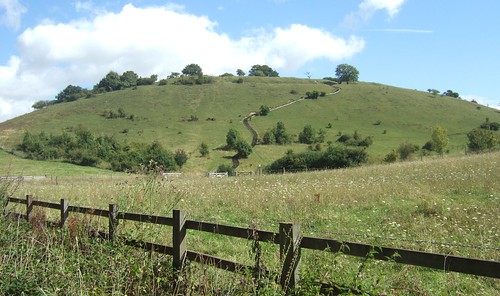
Hill

What’s on the other side? (Image: “Hill,” by Henry Burrows, on Flickr under Creative Commons.)


I like that because so much of what we do, and so many decisions we make in our lives, are based on our guesses about conditions that we aren’t sure of — what’s on “the other side of the hill” — combined with our predictions of what will happen if we take this action or that. According to Theory of Knowledge, we test our guesses and predictions against experience and thereby prepare ourselves for the next decisions we must make, and the next, and so on.

So, whatever decisions you have to make and whatever unknowns you face, may all your guesses be accurate, your predictions sound, and your courage strong.

Have a great week!

___
P.S. As for the quote itself, I found it in a number of different places but the attribution seemed odd. It was twice dated 10 days before the Duke’s death, yet once it was referred to as being included in a book covering an earlier period of his life. That’s a bit of a mystery, but I still like the quote.

Facebooktwitterpinterestlinkedinmailby feather