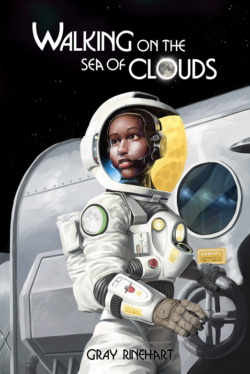
My RavenCon Schedule

Two weeks from today I’ll trek up to Richmond, VA, for RavenCon. The con chairman, Michael Pederson, asked me to come as a guest after we were on a panel together at ConCarolinas last year. How could I turn down his gracious invitation?

Of course, he is making me work while I’m there. Here’s my panel schedule, as I know it now:

  • Artificial Intelligence (moderator), Friday, 3:00 p.m., Cardinal Room
  • Blogging for Writers, Saturday, 1:00 p.m., Cardinal Room
  • Military SF/SF in Military (moderator), Saturday, 6:00 p.m., Dogwood Room
  • Alternative Fuels, Sunday, 1:00 p.m., Rappahanock Room

In addition, I’ll do a reading of Edgar Allen Poe’s “The Imp of the Perverse” on Saturday at 8:00 p.m. in the Rappahanock Room.

I look forward to it — it should be a good time.

(Meanwhile, if anyone has any suggested questions for me to ask as moderator on those two panels, send them my way.)


Facebooktwitterpinterestlinkedinmailby feather

Space History: Space Radar on the Shuttle

Fifteen years ago today — April 9, 1994 — the Space Shuttle Endeavour launched from Kennedy Space Center on mission STS-59. Astronauts Sidney M. Gutierrez, Kevin P. Chilton,* Linda M. Godwin, Jerome “Jay” Apt, Michael R. Clifford, and Thomas D. Jones operated the Space Radar Laboratory (SRL-1) on this mission.

You would think, 15 years after it was demonstrated on a shuttle flight, that the U.S. would have a more robust space-based radar capability. Alas, no: when I was on active duty, serving on the Air Staff, the Air Force was still advocating for that program. (Here’s a 2005 Space Review article about it.) I doubt there will be any room for it in the Pentagon budget any time soon.

___
*Now a USAF General. He commanded AF Space Command and is the current Commander of US Strategic Command.

Facebooktwitterpinterestlinkedinmailby feather

Challenger Launch, 25 Years Ago

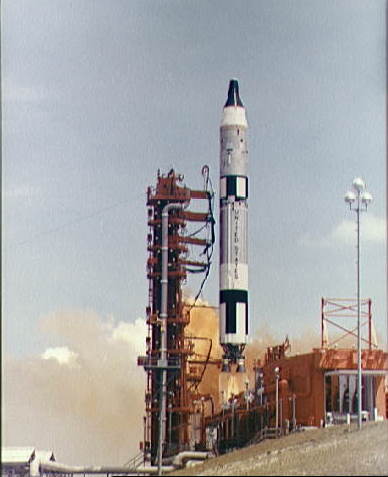
Twenty-five years ago today — April 6, 1984 — the Space Shuttle Challenger launched from the Kennedy Space Center on mission STS-41C. , 8:58 a.m., EST, KSC. Astronauts Robert L. Crippen, Francis R. Scobee, Terry J. Hart, George D. Nelson, and James Van Hoften launched the Long Duration Exposure Facility (LDEF)-1 launched and performed the first in-orbit spacecraft repair on the Solar Max satellite.


(NASA image of STS-41C launch.)

[BREAK, BREAK]

The past few days, I’ve seen a lot of space-related news stories — the North Korean launch failure, the possibility that Congress might start letting U.S. companies sell militarily critical space technology, etc. — so I posted some of them in the Space Warfare Forum for anyone who might be interested.

Facebooktwitterpinterestlinkedinmailby feather

50 Years Ago: The Dawn of Project Mercury

Project Mercury was announced in 1958, but 50 years ago this month the astronauts were selected and presented to the public. I found two different selection dates — April 1st, according to this NASA page about the 40th anniversary, and April 2nd, according to this NASA list of anniversaries.*


(NASA publicity photo of the Mercury Seven)

All sources agree that the “Mercury Seven” astronauts were announced at a NASA press conference on April 9, 1959. They were Scott Carpenter, L. Gordon Cooper, Jr., John H. Glenn, Jr., Virgil I. “Gus” Grissom, Walter M. Schirra, Jr., Alan B. Shepard, Jr., and Donald K. “Deke” Slayton.

___
*From which I get the space anniversaries I want to highlight here on the blog.

Facebooktwitterpinterestlinkedinmailby feather

Catching Up From a Busy Weekend, and a Near-Disaster Revealed

I missed two space anniversaries this weekend, because I spent most of the time finishing a short story and most of the rest of the time either at church or preparing for the worship services. (Excuses, excuses.)

First, the space anniversaries I missed:

– Ten years ago Saturday — March 28, 1999 — Sea Launch launched their “DemoSat,” essentially a ballast-filled “dummy” spacecraft, from the Odyssey launch platform, a converted North Sea oil drilling platform. I had the pleasure of sailing on the Odyssey three years later for the launch of the Galaxy III-C spacecraft.

– Thirty-five years ago yesterday — March 29, 1974 — Mariner 10 made the first flyby of Mercury.

As for the near-disaster, Spaceflight Now ran a CBS News story Friday in which Robert “Hoot” Gibson recalled details of the damage sustained by the shuttle Atlantis on mission STS-27, which launched on December 2, 1988. The shuttle received more damage than on any other mission, and the crew worried that they might not survive re-entry. It’s a frightening story of miscommunication: the classified military mission was conducted under a communications blackout, so when the crew sent video of the damaged areas the encryption degraded the images so much that NASA engineers didn’t believe there was a real problem.

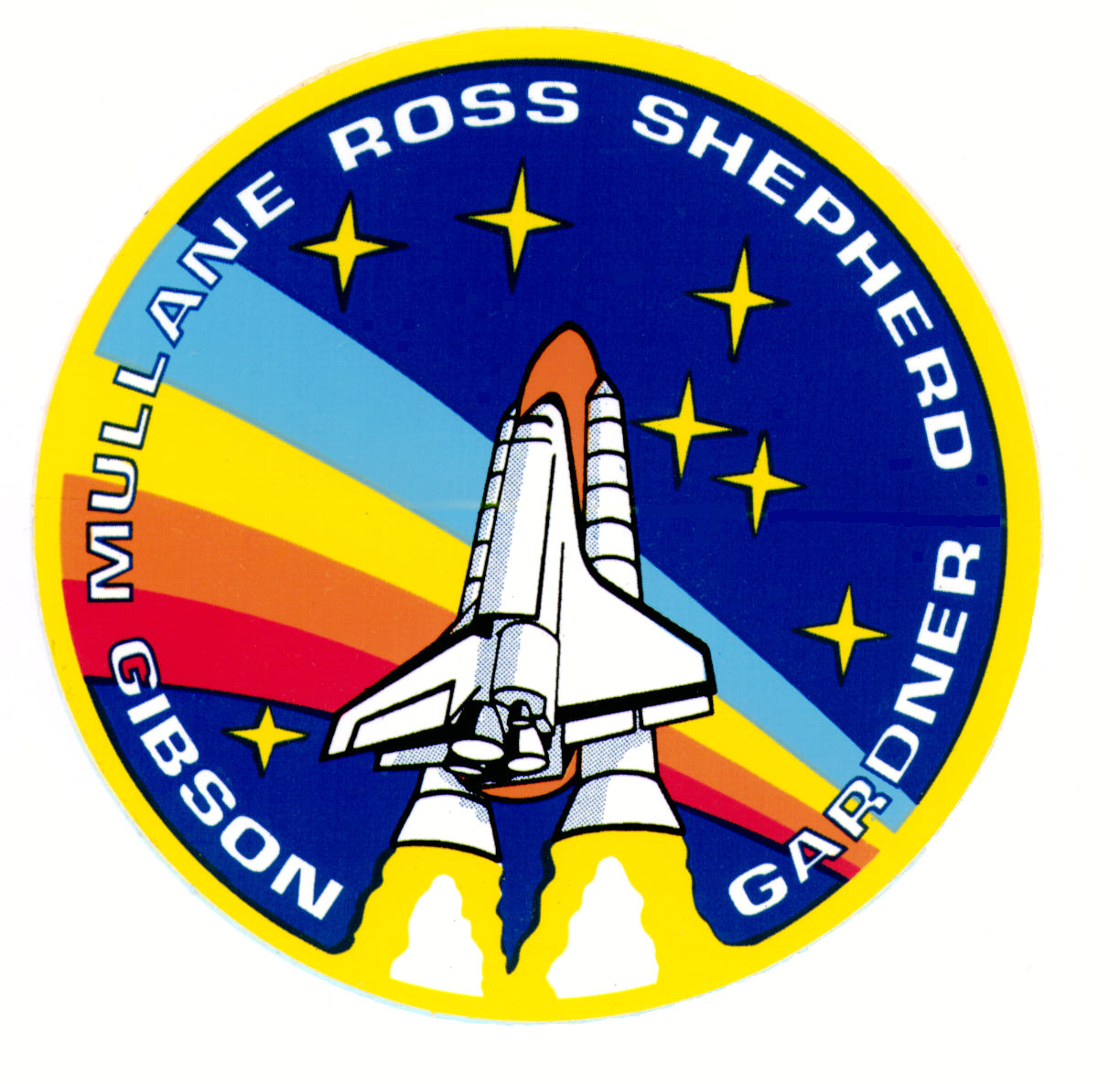
I checked into the mission a little more, and when I saw the mission patch this story became even more compelling to me. I didn’t realize it when I posted the space anniversary of the launch, but when Atlantis landed at Edwards AFB I was on duty as part of the AF Flight Test Center recovery team. We, of course, knew nothing about the damaged tiles or how close that shuttle came to not making it back at all.

(STS-27 mission patch. Click to enlarge.)

Facebooktwitterpinterestlinkedinmailby feather

Did General Cartwright Mean What He Said?

According to Reuters, he said the words, but I wonder if he thought through what the words implied.

General James “Hoss” Cartwright, Vice Chairman of the Joint Chiefs of Staff, was discussing the need to make “hard choices” with respect to funding different weapons systems when he said:

“Would you buy, in tough economic times, something that does one thing well or something that does a hundred things well?”

(The article is here.)

My first reaction to that statement was, to use the vernacular, DUH. Then I thought about it some more and wondered why the economic situation would matter to that decision: the statement seems to imply that the costs of the two “something”s are the same, so of course any fool would buy the one that does 99 more (extra?) things well.

But General Cartwright should know that no complex system that does 100 things well is going to cost the same as something that does only 1 thing well. In truly austere times, it may be necessary to forego most of those 99 extra features in order to afford the 1 feature that matters.

But I’m surprised that he would even imply that it’s possible to build a system that can do a large number (100 was surely hyperbole) of things as well as specialized systems. Trade-offs have to be made, and some amount of performance has to be sacrificed, to add bells and whistles — let alone to add real capabilities. It’s more likely that we would give up the 1 thing done very well to get 10 things done moderately well. That may end up being a real bargain, and he’s right that deciding on the 10 things out of the 100 possible things will involve difficult choices, but the real issue is whether the end result will be adequate to accomplish the mission.

Facebooktwitterpinterestlinkedinmailby feather

Today in Space History: Shuttle Delivery

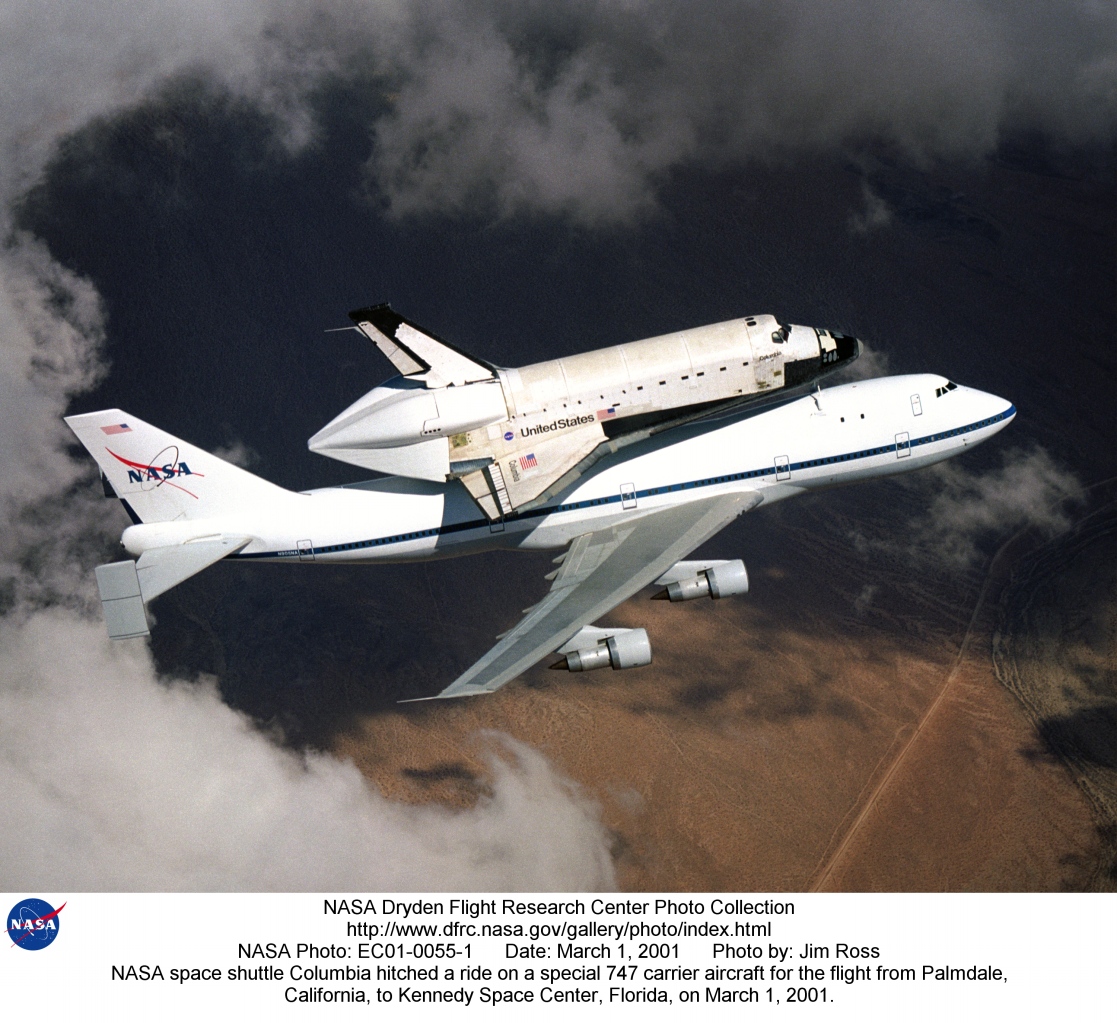
Thirty years ago today — March 24, 1979 — the Space Shuttle Columbia was transported to Kennedy Space Center, marking the first time a shuttle was delivered to the launch base. It was carried atop a modified Boeing 747 as shown in the attached image.*

(NASA Photo EC01-0055-1. Click to enlarge.)

___
*The image is of a later flight, in March 2001.

Facebooktwitterpinterestlinkedinmailby feather

The World Owes Me Nothing

Not too long ago I had a brief conversation on Twitter* about whether the world owes us anything. I say, the world owes me nothing.

I’ve heard people say, “I didn’t ask to be born,” and proceed to demand recompense from the world.

I say, the world didn’t ask for any of us to be born. We owe something for what we have, and get.

___
*See http://twitter.com/GrayRinehart.

Facebooktwitterpinterestlinkedinmailby feather

Bonus Entry on Taxes: Guest Post on Withholding

My series on taxes officially ended yesterday, but here’s a bonus entry submitted via e-mail by my college buddy David O’Nan:

Personally, although tax changes are needed badly, the first action that should be taken is to do away with withholding. Make every taxpayer pay a check to the government every month for taxes and another check for their FICA/etc (and quit allowing them to move surpluses from one to the other to hide their spending). It’s so “hidden” now that most only have general ideas and don’t feel the pain the same way they would if they consciously had to pay the taxes. And any changes are similarly “hidden.” If every time they made a change in taxes you had to change the amount you paid (up or down), everyone will know exactly the difference rather than relying on pundits and wonks and people with agendas to tell them a slanted view of the impact.

People will start to think twice about what they expect government to fix when they get slapped upside the head with the tax bill the first few times. Once that object lesson is learned, then you could make better headway in addressing some of the ridiculous stuff that doesn’t raise widespread ire because the consequences are out there in the ether somewhere.

In a separate e-mail, he wrote,

It would be a fun idea to implement, but even if someone has direct-deposit and banks online, they still get to see the impact on every bank statement (paper or online). Every taxpayer already has a taxpayer ID number so it can’t be any more difficult to track than tax returns. Have them pay their tax within a month of the paycheck (more than one paycheck a month, more than one tax payment and FICA payment a month).

I don’t know about having to write so many checks based on how many paychecks you get — for those of us with multiple jobs, that would be a real pain. But I do know that my tax burden became much more real when I started paying estimated taxes, since part of my income has no withholding and my income fluctuates from time to time. So with respect to making it more obvious just how much everyone is paying in taxes, David is certainly on to something.

Thanks, David, for sending that in and letting me post it!

Facebooktwitterpinterestlinkedinmailby feather