Merry Christmas! Here’s a (FREE) Song

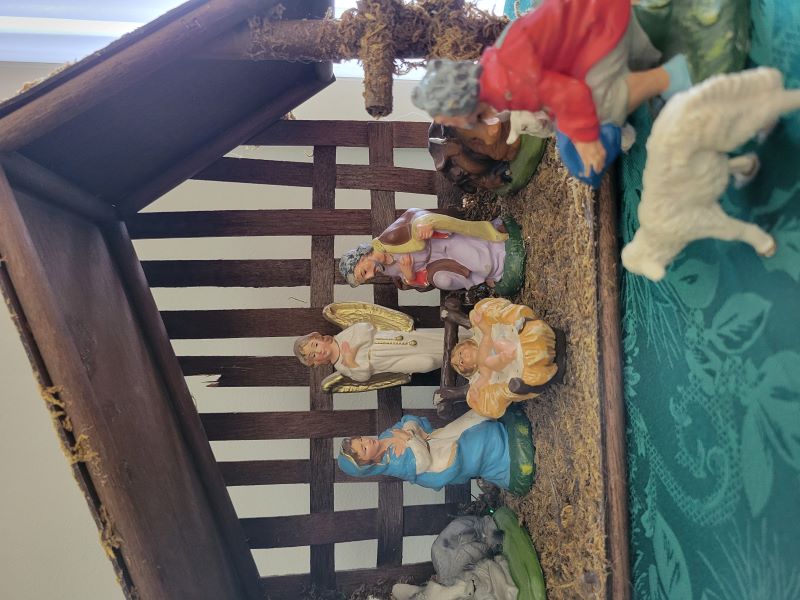
Merry Christmas to you and yours, and I hope your day is merry and bright! 🎄

My gift to the world is a new Christmas song, “Born to Make a Difference,” which I finally got into shape after several years of trial and editing. Here’s how it starts:

How many children were born that very night
And drew their first dramatic breaths under flickering lamplight
And wailed and were swaddled as the next day dawned
And rocked and nursed and comforted in their young mothers' arms?

(Chorus)
He was born to make a difference
He was born for mercy and for love
He was born to give the world a better way to live
He was born to show the truth of God with us

It's free for everybody, at either Bandcamp or on YouTube. If you like it, I hope you’ll share it with someone else who would!

I hope your holidays — whatever you celebrate, wherever you are — bring you joy and fulfillment, and that this year ends on a high note for you! I wish for you only good things, now and always.

___

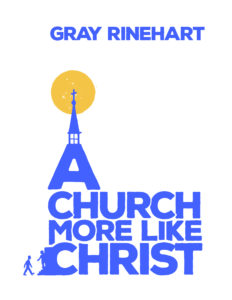
P.S. For more detailed thoughts about the Christ we celebrate, take a look at my award-winning little book, A Church More Like Christ

Facebooktwitterpinterestlinkedinmailby feather

Knocking at Your Church Door

In a famous passage that most Christians will recognize — Revelation 3:20 — John the Revelator quotes the glorified Jesus as saying,

Behold, I stand at the door and knock; if anyone hears my voice and opens the door, I will come in and dine with him….

For most of my life, that verse was taught to me on a personal level: that Jesus stood at the door of my heart and knocked. From that perspective, it was my choice to respond, to “let Jesus into my heart” as the expression goes. It was a call to conversion, to salvation.

Of late, however, I’ve thought more of Scripture as being aimed at communities rather than individuals — that was one of the central ideas of A Church More Like Christ, after all — and in fact that section of Revelation was addressed to “the angel of the church in Laodicea.”

So, do you think your church — either the leaders or members — has ever read that passage as

Behold, I stand at the door of your church and knock….

?

And if they were to read it that way, how quick would they be to open the door?

I believe that a church that opens its door to the Lord, that lets him inside in a real and authentic way, has the potential (to paraphrase the back cover copy of my book) to be a force for good, a light in the darkness, and an outpost of God’s kingdom in this world. It has the potential to be a place where the wounded find comfort and healing, the broken find repair and restoration, and the vulnerable find help and hope.

I could be wrong, but that, I think, is what every Christian church should be.

___

For other musings and oddball ideas,
– Take a look at A Church More Like Christ, awarded a Silver medal by the Military Writers Society of America
– Or my other MWSA Silver medalist, Elements of War
– Or my Amazon Page, my Bandcamp Page, or just my website

Facebooktwitterpinterestlinkedinmailby feather

Not Faith, But Something Else?

What was it Jesus commended in Simon when he started calling him Peter? Here, paraphrased from Matthew chapter 16:

Jesus (to all the disciples): Who do you say that I am?
Simon: You are the Christ, the son of the living God.
Jesus: Simon, you’re blessed, because my Father in heaven revealed that to you rather than anyone of flesh and blood. And now I call you Peter,* and on this rock I will build my church.

*From petra, meaning “rock.”

Now, only Matthew 16 makes the distinction that this is where Simon became Peter. In Mark 8 and Luke 9, Jesus asks the same question and Peter gives the same answer, at which point Jesus tells the disciples not to tell anyone. We could say more about those differences, in terms of how the gospels were compiled and what their authors tended to emphasize, but that’s a subject for another day.

Today’s question, again, is: What did Jesus find so commendable? It had to be foundational to Peter’s statement, in order for Jesus to declare that Peter was solid enough to uphold his church.

I’ve been told, time and again, that Jesus here was commending Peter’s faith, and it was upon that faith–and the faith of all believers–that his church would rest. But was that it?

Reading the Matthew passage strictly, Jesus refers to revelation, not faith. Jesus didn’t call Peter’s identifying him as the Christ–the Messiah, the Anointed One of God–a matter of belief, something that Peter had come to believe, but rather something God had shown him.

Did he mean, perhaps, that the church is built upon revelation–or maybe just realization? That is, instead of being a place for the “faithful” that sometimes feels uncomfortable for those of us of lesser faith, could the church be a place for the “aware,” for those of us who have realized that Jesus’s life and mission are important and compelling enough for us to join him in it, however imperfectly we might do so?

Revelation, after all, is not about belief. It’s not a matter of faith. It’s a matter of being shown, which means it’s also a matter of having our eyes open to see.

___

For other musings and oddball ideas,
– Take a look at A Church More Like Christ, awarded a Silver medal by the Military Writers Society of America
– Subscribe to my newsletter (and get some free gifts)

Facebooktwitterpinterestlinkedinmailby feather

Life Metaphors: the Garden, the Tree, and the Fall

Many years ago, I learned to regard Scripture “literally” in a very specific sense: not in the sense that each word must be understood in a literal sense, but that the Bible contains very different types of literature and that it’s often best to treat each type separately. History as history, poetry as poetry, philosophy as philosophy, and so forth.

For some years now, I’ve come to understand more parts of Scripture as metaphor. I won’t go so far as to say I’m right in each case, but thinking of some parts as metaphorical helps me understand it a little better.


(The Garden of Eden, by Thomas Cole, 1828. Public domain.)

For instance, what can the story of the Fall tell us if it is more metaphorical than historical? I’ve begun thinking of it as representative of our human journey through life.

Here’s what I mean by that:

The Garden represents the innocence into which we are born. It represents our earliest breaths, our pure potentiality, and even our exploration of the wonders of the world. It is that state in our lives, before we have grown jaded and corrupted, when we don’t understand the pain we experience, in which we are closest to the God who made us. We walk in the cool shade, naked and unashamed.

Then we encounter the Tree.

The Tree, of course, represents knowledge — it is the tree of the knowledge of good and evil, after all — and possibly wisdom. It is larger than we are, and we can rest in its shade or climb its heights; though, if we climb, we run the risk of falling. And its fruit is not one fruit only, but many: often sweet, but sometimes unfortunately bitter — and even, perhaps, poisonous. As we eat of it, we grow out of the innocence of youth into adulthood (and hopefully into knowledge), but do we grow into wisdom? If we’re lucky, if we’re careful, perhaps, though we may only do so by climbing and falling and climbing again, over and over, despite the injuries we sustain.

Finally, we face the Fall — expulsion from not only the vicinity of the Tree but from the Garden entire. In this metaphor, the Fall represents death. No matter how much knowledge we attain or wisdom we develop, we are condemned to the grave.

But just as being expelled from the Garden opened up a wider world for humanity to explore, we may hope that death opens up new vistas, broader universes, and deeper knowledge of God and all of reality.

___

For other musings and oddball ideas, see
A Church More Like Christ
– My other recent release, Elements of War
– My Amazon Page or my Bandcamp Page, or subscribe to my newsletter

Facebooktwitterpinterestlinkedinmailby feather

God, Knows

A few weeks ago, a musician friend posted a thought-provoking question on Facebook. He said he is an atheist, but in all sincerity asked: “What does God believe?”

I answered that God believes that all of us are lovable. I think that, even when we feel unlovable, even when we are at our lowest points, God believes we are lovable and acts on that belief by loving us. I believe Scripture bears that out, as 1 John tells us God is love.

The question started my mental gears turning, in their teeth-broken-or-keys-missing-or-bearings-needing-greasing-lest-they-seize-at-any-moment manner, and I began to ponder not what God believes but what does God know?

The pat answer — that God knows everything, that the omniscient nature we ascribe to God is sufficient to account for all nuances of the question — felt unsatisfying to me.

I’ve studied Theory of Knowledge for some years (ha! some decades, now), and written about it in two books — applied to warfare in Elements of War, and to educational administration in Quality Education — and I began to think about God and knowledge from that perspective.

Theory of Knowledge is less about what we know than about how we know: how we observe the world around us and process sensory inputs, how we develop concepts to make sense of “the chaos of the given” (a term I much appreciate from C.I. Lewis’s Mind and the World Order), and how we apply those concepts to develop predictions of how the world will work. Knowledge in action consists of those predictions we make, and experience either bears them out or gives us more input to refine those predictions, those theories. The inputs, the data, are not knowledge, nor is information. Knowledge is a product and a tool: data become information, which becomes knowledge, which we then use to interact with the world.

It seemed too much for me to try to conceptualize God’s knowledge in terms of sensory input data being processed into information and thus into predictive knowledge. It occurred to me that part of God’s nature might just include being omnisentient,* or sensing everything. As the author of all creation, God it seems must have sensed, must have compassed, all the resultant effects of creation. All the raw data of creation, down to quantum phenomenon beyond the charge and spin of subatomic particles, must at least be available to God in every instant of what we think of as time (which itself may be some completely different dimension to God).

The more I tried to wrap my mind around it, the more I found it was rather too much for my feeble brain to begin to comprehend.

But there’s another aspect of knowledge I think applies. Under Theory of Knowledge, all knowledge in our experience is predictive — we apply the concepts and theories to decide how to act, based on how we think those actions and other factors are likely to turn out — and, as such, our knowledge is subject to error. There are some things we know with near certainty, but always we face the possibility that we may be wrong. Every prediction we make, from the most mundane to the most critical, has within it the possibility that it will be wrong.

Not so with God, I think. To us, knowledge is probable; to God, knowledge is certain. We think we know; in contrast, God knows.

I do not mean that in the quasi-Calvinistic sense that everything is predetermined. I reject that utterly, because I reject the notion that we are puppets deluded into thinking we have agency and because it has led to too many painful outcomes to have been the intent of our loving God. Instead, I mean it in terms that while our limited human brains can predict a wide variety of possible outcome for any action, God’s infinite mind can conceive of every possible outcome.

Fork in the road, decision tree, September, Discovery Park, Seattle, Washington, USA
(Image: “Fork in the road, decision tree, September, Discovery Park, Seattle, Washington, USA,” by Wonderlane, on Flickr under Creative Commons.)

Think of our actions as taking place at metaphorical forks in the road, where we must decide which path to take. The farther we go, the more such choices we make, always hopeful of the destination we have in mind. But because our knowledge is imperfect, we cannot always be sure of our choices. Some of those paths may lead us to destruction, some to penury, some to success beyond our wildest imaginations, but we cannot know with certainty which path is best to take.

In contrast, God knows the outcomes of all the paths. Perhaps it is not that God knows which specific decision we will make in any given moment, which fork in the road we will take, as much as that God knows what will happen whichever path we pursue: at that fork, and the next, and the next, outward into infinity. And not only that: As we exercise our freedom to choose, even if our choices are unwise, God loves us no matter what.

I hope that is as great a source of comfort for you as it is for me: Not only that God knows, but that God loves us despite the possible (and the realized) failings that our limited-knowledge choices may produce.

___

*A word of my own coinage, at least as far as I know. I reckon we could consider God to be omnisapient as well.

___

If this post provoked any thought for you — or just provoked you — you might also be interested in my latest book, A Church More Like Christ.

Facebooktwitterpinterestlinkedinmailby feather

Does Your Church Deny Itself?

At the church we attended yesterday, the sermon text was from the eighth chapter of the Gospel of Mark and, once again, I found myself thinking about Christ’s words as they might apply to the organized church as well as to individual Christians.

To paraphrase,

… He summoned the crowd together with His disciples, and said to them, “If any church wants to come after Me, it must deny itself, take up its cross, and follow Me. For whoever wants to save his soul will lose it, but whoever loses his soul for My sake and the gospel’s will save it. For what does it benefit a church to gain the whole world, and forfeit its soul? For what could a church give in exchange for its soul?”

The pastor spent some time on what “denial” means in this context, i.e., what it means for us to deny ourselves. But what church denies itself?

In my experience, a church only denies itself if it’s not bringing in enough offerings to cover whatever it wants to do or buy– and even then, I’ve seen churches go into debt (often couched as “stepping out in faith”) to finance projects that were more wants than needs, and that served themselves more than others. I do not recall being a member of or associated with a church that systematically denied itself in order to bless or benefit others more consistently or more thoroughly.

Do you know of one? This example came to my attention recently: a church in Winston-Salem, North Carolina, that over the years has bought and forgiven millions of dollars’ worth of medical debt. Have you heard of any others?


(Image: “Matthew 16:24,” by GuardtheDoors, on DeviantArt under Creative Commons.)

And what might it mean for a church to deny itself and take up its own cross? What church is prepared to follow its Savior to Calvary, to sacrifice itself — its riches, its reputation, even its very existence — for the sake of the gospel?

Too many churches — and even one is too many — seem instead to sacrifice the gospel for the sake of worldly standing, influence, and power. Those churches build monuments to themselves more than temples to a holy God: sheepfolds in which to shelter more and more converts that join their flocks, rather than training grounds to develop more and better disciples to send out in service. They focus their attention so much on those inside the church that the wider world becomes blurry in their vision, sometimes to the point that the world outside the church may as well not even exist — or, if they do cast a quick glance at and reach out to the world outside the walls, their efforts are perfunctory and only a pale imitation of their Lord.

Whether corporate churches or individuals, may God forgive us for all the good we could have done for others if we were not so focused on doing good for ourselves.

___

If you’re interested in more thoughts along these lines, I’d be honored if you took a look at my book, A Church More Like Christ.

Facebooktwitterpinterestlinkedinmailby feather

Not Very Christian of Me

Confession can be good for the soul. Will you take my confession?

I confess that I would like — in the sense of taking perverse enjoyment — to kill a man. Two men, in fact. Or, possibly better yet, to maim them: beat them to bloody pulps and leave them to contemplate their crimes in as much pain as I could inflict.

Not very Christian of me, I know.

Here’s what I wrote about one of the base-born whom I would like to destroy: a child molester who has never been called to account.

I know of a case where a particular brand of Calvinism led an otherwise upstanding Christian woman to discount her middle-school molestation by a college dropout (and purportedly good, strong Christian) as “God’s will.” They were, she claimed, “in love”—and while it’s true that Scripture tells us love covers a multitude of sins (1 Peter 4:8, perhaps alluding to Proverbs 10:12), we might debate whether it covers what would get one party on a sex offenders’ register. As it was, neither that victim nor another I learned of later were willing to call the perpetrator to account; and hearsay, alas, is insufficient to interest law enforcement.

And here, I confess how much I would like to wound him and another abusive fiend:

As one who harbors a certain amount of unforgiveness in his heart—truthfully, a significant amount, particularly toward men who have abused women I love—this part of the Lord’s Prayer [i.e., “forgive us … as we forgive”] gives me pause. These men have never asked for forgiveness, which would force my hand and put the onus on me to live up to Jesus’s instruction to forgive numerous times (Matthew 18:21-2), and I expect they never will: My anger toward them is all internal. These men did not sin directly against me, but nonetheless all I feel for them is marginally controlled fury. As much as I remind myself that the Lord claimed the right of vengeance (Romans 12:19, after Deuteronomy 32:35), part of me would dearly love it if I could be, to corrupt St. Francis of Assisi’s prayer, made an instrument of the Lord’s wrath.

How I wish the Lord would change my heart — cool the burning rage, soothe the intolerable pain, or (even better!) excise the cancerous memory — so I can go through my days without wishing for the opportunity to swing a baseball bat, a tire iron, or some even more dangerous weapon at their smug, self-satisfied faces.

Anyway, that’s my confession.

rage
(Image: “Rage,” by istolethetv, on Flickr under Creative Commons.)

From time to time, I see a post on social media along the lines of “the only thing keeping me from killing someone is not wanting to go to jail,” and I can relate to that — but avoiding jail isn’t the only thing that stays my hand. I’ve been told that neither of them are worth it, and I see the wisdom in that. But, primarily, I want to be better than either of them can ever hope to be. But sometimes that’s not as satisfying as I might wish. I would settle for selective amnesia, by which I might evict all thought of them from my head.

How about you? Is there anyone you wish you could injure, or kill, or visit with some other form of vengeance? I’m genuinely curious if anyone else would admit, would confess, to the same deadly desire.

___

P.S. Believe it or not, those passages of confession are from A Church More Like Christ. It’s a short book, and thankfully has more in it than just me railing against abusers.

Facebooktwitterpinterestlinkedinmailby feather

Unwanted Epiphanies

Today is Epiphany, when we Christians celebrate the wise men visiting the infant Jesus.

An epiphany, in more general terms of course, is some sudden insight, some moment of revelation, some instant of burgeoning wisdom.

And sometimes, epiphanies suck.


(Image: “Epiphany,” by Beck3D, on DeviantArt under Creative Commons.)

Discovering unwanted, unimagined, heartbreaking facts, after which we can never return to that state of innocence, of blissful ignorance we previously enjoyed — those epiphanies can be soul-crushing. The pain, the bitterness, lingers.

Maybe on this day we can be more like the wise men, who saw a good sign and reckoned it for what it was, and then fitted out their caravan and sallied forth.

Hopefully what we find will bring more joy than pain, more happiness than hardship. And hopefully it will be enough to comfort us, and maybe to heal us, when unwanted epiphanies come our way.

Facebooktwitterpinterestlinkedinmailby feather

You – Yes, YOU – Are Salt and Light

Whoever you are, wherever you are, as you read this, I believe you are the salt of the earth and you are the light of the world, as Jesus told his followers they were two-thousand-some years ago.

If you’re not familiar with what Jesus said about salt and light, here’s a paraphrase from the Gospel of Matthew, chapter five, the Sermon on the Mount:

You are the salt of the earth. But if the salt has lost its saltiness, how will it be made salty again? It is then good for nothing but to be cast out, and to be trodden under foot.

You are the light of the world. A city on a hill cannot be hidden, nor do we light a candle and put it under a basket, but on a candlestick so it lights everyone in the house. So let your light shine before men that they may see your good works and glorify your Father in heaven.

To be considered salt is to be both useful and valuable. In the ancient world, salt was extremely important: not just as a flavoring but as a preservative and even as currency (the word “salary” derives from salt). A few years ago, in fact, I wrote a trio of blog posts about salt in which I examined such things as how just the right amount of salt is needed and “salty” language and even how “Immigrants Are Like Salt”.

And to be the light of the world is not only to be useful but to be, quite literally, illuminating.

I believe that you, whether you are of any faith — Christian or Jewish or Muslim or Buddhist or Shinto or Taoist or what-have-you — or no faith, are salt and light. Yes, whether you are a theist or an atheist, whether you are devout or agnostic, you are — not “might be,” not “ought to be,” but aresalt and light at least to some degree.

Why do I think that? Because

Jesus told his listeners that they were — and, by extension, we are — the salt of the Earth and the light of the world, and it is worth noting that Christ was not speaking to Christians because no one at the time would have been considered such. We must conclude, then, that everyone, whether a professed believer or a staunch antitheist, is salt that is either savory or has lost its savor; likewise, everyone is a light that is either on a stand or under a basket.*

Salt of the Earth
(Image: “Salt of the Earth,” by David Campbell, on Flickr under Creative Commons.)

It is true that Jesus’s audience was primarily Jewish, but I feel certain some Gentiles who either lived in the area, were passing through as merchants, or were observing the crowd as Roman soldiers might, must have heard what he said. I believe his words were meant for them as well. And while many things in the Hebrew Bible apply only to Jewish people, and many things in the New Testament apply only to professing Christians, this can be true of everyone, for all time.

So I conclude that you, in whatever situation you find yourself in, and wherever you go throughout your life, are salt and light. And so am I. As such, it is up to us whether we will be flavorless and thereby worthless salt, or whether we will be flavorful; and it is up to us whether we will be dim lights or hidden, or whether we will shine brightly on the world around us.

___
*From A Church More Like Christ, now available as an e-book, a trade paperback, or an audiobook.

Facebooktwitterpinterestlinkedinmailby feather

Is This Book Right for You?

My latest nonfiction book, A Church More Like Christ, is now available for pre-order!

Specifically, the Kindle e-book can be pre-ordered, and will be delivered on 3 September. It costs $1.99, which I hope folks will find reasonable.

If you’re wondering whether the book is right for you, the back-cover copy may give you an idea:

A church like Christ would
• Teach like Jesus
• Worship like Jesus
• Pray and live and love like Jesus

Is your church a force for good, a light in the darkness, an outpost of God’s kingdom in the world? Do the wounded find comfort and healing in your church? Do the broken find repair and restoration? Do the vulnerable find help and hope? Does your church offer refuge for the oppressed, a hand up to the beaten-down, and recognition to the unseen? If so, this book may not be for you.

If not—if your church is divided against itself, or focused only on itself, or more judgmental than caring—it may be that the church is not as much like Christ as it could be. A Church More Like Christ can help you examine how Christlike your church is, and give you new ways to think about what it means for a church to live out the faith it practices.

If the church were quicker to comfort than to condemn, quicker to heal rather than harm, quicker to love than to hate, disparage, or ignore, perhaps it would be a greater source of inspiration, strength, and change in people’s lives—and in the world. If so, it would be, in effect, more like Christ.


(A Church More Like Christ graphic courtesy of Stephen Minervino.)

If you decide the book might interest you, by all means pre-order the e-book at this link; or, wait for the paperback to be released on 3 September and order that instead! (It’ll be $7.99, which again I hope folks will find reasonable.)

And if you know anyone else who might be interested, please let them know!

___

For other musings and oddball ideas, see
– My other recent release! Elements of War (paperback)
– My Amazon Page or Bandcamp Page, or subscribe to my newsletter

Facebooktwitterpinterestlinkedinmailby feather