Human Rights Are Individual Rights

Sometimes it’s necessary to state the obvious, so here goes: People will not read this post, though a person might.

You can probably already see where I’m going with this. So let’s go there.

People — collectively — will not read this. Individual persons — singular people — might. (One possible exception is if a person were to read the post aloud to someone else, or even to an assembled group of people, but how often does that happen in the modern world?)

This idea of singularity rather than plurality applies regardless of demographic. Black people will not read this post, though a black person might. Ditto for white people, or any other racial label you might apply. Rich people will not read this post, though a rich person might. Et cetera.

My point here is that we make a mistake when we talk about “people” collectively, as if they are cells operating together in a huge body instead of entities operating individually as persons. It’s a failure of language, and maybe a failure of perspective.

We make the mistake whenever we lump people together into groups, especially groups we want to criticize or lionize: Democrats and Republicans; Christians and atheists; Carolina fans and Clemson fans (!). It is easier to treat them as groups we can point at as if “they” were amoebic, single-minded masses instead of individuals with their own attitudes, abilities, and dreams. (“They” collectively — and “we” collectively — make it hard when some individuals come together to make trouble, whether as not-so-peaceful protesters or sports hooligans, but even then some individuals stand apart and aloof, separate from the mob, and deserve not to be lumped in with the troublemakers.)


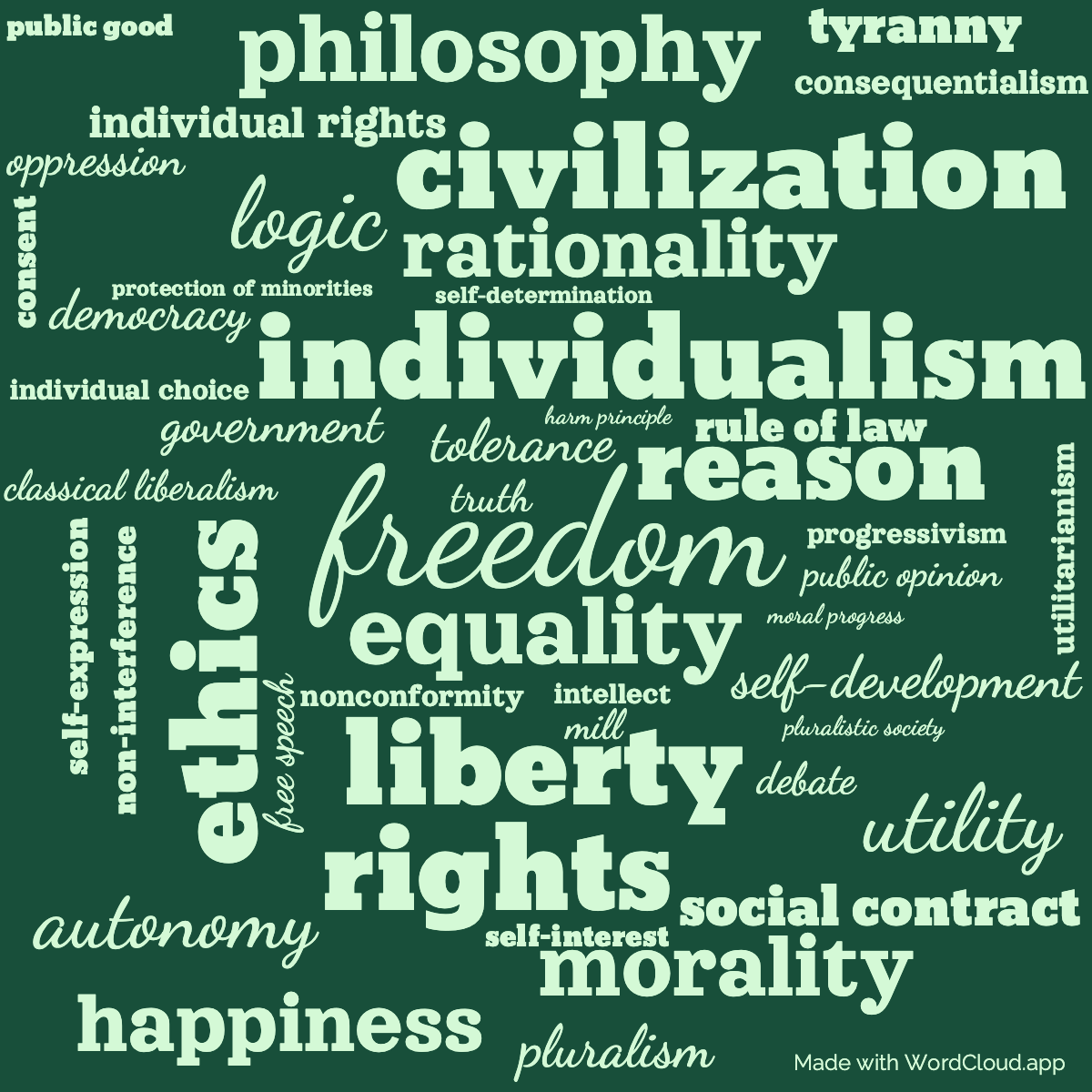
(Image: Word Cloud, “On Liberty by John Stuart Mill: An Important Book for Intellectual Thinkers,” by _, on WordCloud.app.)

Finally, now to the point of this post: Yes, we make a similar mistake with respect to rights. People do not have rights, though persons might. Groups do not have rights, only the individuals within those groups.

Why? Because rights are exercised individually, they belong to individuals. We err when we overemphasize rights with respect to groups and neglect the individuals who make up those groups. We can end up diluting those rights, acting as if they are only spread across large populations rather than held by singular people, and that is a dangerous step toward overlooking and even removing those rights.

Let’s not go down that road.

___

Maybe none of this needed to be said, but it’s done now. For other musings and oddball ideas,
– Take a look at A Church More Like Christ, awarded a Silver medal by the Military Writers Society of America
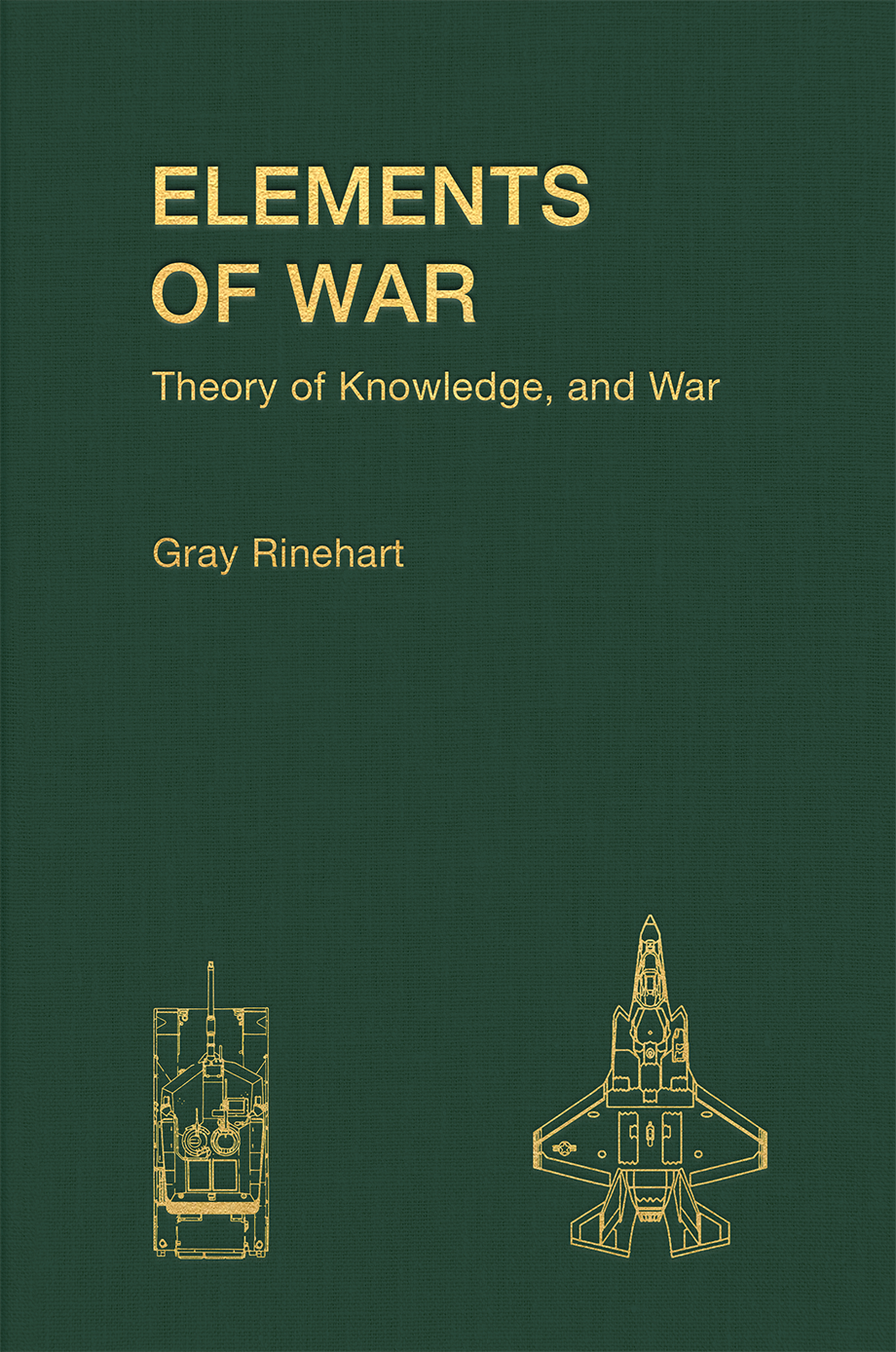
– Or explore my other MWSA Silver medalist, Elements of War
– Or even subscribe to my newsletter (and get some free gifts)

Facebooktwitterpinterestlinkedinmailby feather

Yearning to Breathe Free?

Most everyone in the United States and very many people in the world are familiar with the inspiring lines inscribed on a plaque in the pedestal of the Statue of Liberty:

Give me your tired, your poor,
Your huddled masses

The phrase comes from Emma Lazarus’s poem, “The New Colossus.” I’ve noticed that a few people seem to treat the poem as if it expresses some official policy of the USA, but it does not; it was written as part of a public effort to raise money to build the statue’s pedestal. And from some of the recent rhetoric about immigration, it seems that a few people leave out an important clause, treating the lines as if the statue is said to be welcoming any and all tired, poor, huddled masses as opposed to those “yearning to breathe free.”

It seems, then, that we need to re-emphasize that part.

First, what does it mean to yearn? Most of us know this in our bones, because we do so even if we may not use the word. We all have (or have had) things we yearn for, important things we earnestly desire with a depth so profound that to fail to achieve them would be a fate nearly as dire as death. Perhaps we yearn for love, or success, or a peaceful existence, but whatever it is, we wish for it with all our heart even if it may be beyond our reach.

Then what does it mean, really mean, to breathe free? Is it simply to be liberated from whatever persecutions or hardships we face, to be even momentarily out from under the boot of oppression or poverty or disease? Not quite. Temporary release would be a reprieve rather than a life. Breathing free may at first come by escaping from a previous situation, but continuing to breathe free comes at the price of the effort to maintain that freedom.

Yearning to breathe free, then–and particularly yearning to keep breathing free as time goes on–means not only the earnest desire to achieve freedom but also the deep commitment to hold on to and support that freedom by will and effort. I don’t pretend to know the situations of everyone, but that commitment seems to be lacking in some of the tired and poor who behave as if coming here is supposed to automatically and immediately confer rest and riches, as if the Declaration of Independence said happiness is to be granted rather than pursued. Admittedly, that same commitment seems to be lacking in some of those born here, who behave likewise as if they expect and are entitled to a lifetime of breathing free. Yearning to breathe free is not a wish to be released from toil, but a wish to enjoy the benefits of one’s toil; not a wish to be subjugated to a life of dependence on others, but a wish for a life of opportunity to survive … and maybe even to prosper.

How about you? Do you yearn to breathe free? If so, I bet you know that it entails more than just wishing for liberty: it requires working for it.


(Image: The Statue of Liberty, by AskALotl, on Wikimedia Commons.)

___

I would be remiss if I did not present the full poem, which contrasts the then-to-be-erected Statue of Liberty with the classical Colossus of Rhodes. It is in the public domain, and is deserving of close study:

Not like the brazen giant of Greek fame,
With conquering limbs astride from land to land;
Here at our sea-washed, sunset gates shall stand
A mighty woman with a torch, whose flame
Is the imprisoned lightning, and her name
Mother of Exiles. From her beacon-hand
Glows world-wide welcome; her mild eyes command
The air-bridged harbor that twin cities frame.

“Keep, ancient lands, your storied pomp!” cries she
With silent lips. “Give me your tired, your poor,
Your huddled masses yearning to breathe free,
The wretched refuse of your teeming shore.
Send these, the homeless, tempest-tost to me,
I lift my lamp beside the golden door!”

It’s a wonderful sonnet, and I appreciate Ms. Lazarus’s turns of phrase (especially “imprisoned lightning” to describe electricity). I may have read more into it than Ms. Lazarus intended, but that’s what we do with all writings, from the Bible to blog posts: interpret them in our own ways, and read between the words and lines for what they mean to us.

In the end, I wish for us all the opportunity to continue to breathe free.

Facebooktwitterpinterestlinkedinmailby feather

Not Faith, But Something Else?

What was it Jesus commended in Simon when he started calling him Peter? Here, paraphrased from Matthew chapter 16:

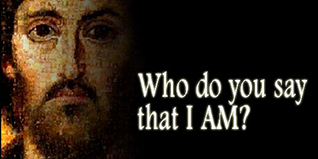
Jesus (to all the disciples): Who do you say that I am?
Simon: You are the Christ, the son of the living God.
Jesus: Simon, you’re blessed, because my Father in heaven revealed that to you rather than anyone of flesh and blood. And now I call you Peter,* and on this rock I will build my church.

*From petra, meaning “rock.”

Now, only Matthew 16 makes the distinction that this is where Simon became Peter. In Mark 8 and Luke 9, Jesus asks the same question and Peter gives the same answer, at which point Jesus tells the disciples not to tell anyone. We could say more about those differences, in terms of how the gospels were compiled and what their authors tended to emphasize, but that’s a subject for another day.

Today’s question, again, is: What did Jesus find so commendable? It had to be foundational to Peter’s statement, in order for Jesus to declare that Peter was solid enough to uphold his church.

I’ve been told, time and again, that Jesus here was commending Peter’s faith, and it was upon that faith–and the faith of all believers–that his church would rest. But was that it?

Reading the Matthew passage strictly, Jesus refers to revelation, not faith. Jesus didn’t call Peter’s identifying him as the Christ–the Messiah, the Anointed One of God–a matter of belief, something that Peter had come to believe, but rather something God had shown him.

Did he mean, perhaps, that the church is built upon revelation–or maybe just realization? That is, instead of being a place for the “faithful” that sometimes feels uncomfortable for those of us of lesser faith, could the church be a place for the “aware,” for those of us who have realized that Jesus’s life and mission are important and compelling enough for us to join him in it, however imperfectly we might do so?

Revelation, after all, is not about belief. It’s not a matter of faith. It’s a matter of being shown, which means it’s also a matter of having our eyes open to see.

___

For other musings and oddball ideas,
– Take a look at A Church More Like Christ, awarded a Silver medal by the Military Writers Society of America
– Subscribe to my newsletter (and get some free gifts)

Facebooktwitterpinterestlinkedinmailby feather

Beyond Imagination? I Think Not

In my work as the Slushmaster General (officially, “Contributing Editor”) for Baen Books, I look at a lot of submissions from budding authors. Sometimes I’m pleasantly surprised by the clarity and liveliness of their prose. Much of the time, I’m simply disappointed that what I read doesn’t live up to expectations or isn’t right for our publishing house.

At times, however, I run across something that beggars belief. One such is a phrase I’ve noticed a number of times in cover letters: “beyond imagination.”

Writer, you have penned a story using your imagination! By definition, it cannot be “beyond imagination”! How can you have written your story, if that were the case?


(Image: “Life in the minds of children,” by archanN.jpg, on Wikimedia under Creative Commons.)

And, more to the point, how do you expect your story to live up to such an extraordinary claim? This is why “less is more” is good advice when preparing a cover letter.

All we really need to know is the title of your novel, what kind of novel it is, and how long it is. When you start adding much more, you give yourself more opportunities to make mistakes–and sometimes those mistakes cast doubt in our minds about your ability to craft a compelling story.

As my Dad told me many times, “A word to the wise is sufficient”–and, yes, the fact that he had to say it so often proved that I was not wise. Likewise, then: Authors, be wise … as well as imaginative!

___

For some recent writings of mine that were clearly not beyond imagination, see
A Church More Like Christ, awarded a Silver medal by the Military Writers Society of America
Elements of War, also awarded a Silver medal by the Military Writers Society of America

Facebooktwitterpinterestlinkedinmailby feather

Kind Words About ELEMENTS OF WAR

I generally expect things I’ve written to get mixed reviews, because a) not everything is to everyone’s taste, and b) I have unusual and sometimes potentially controversial takes on subjects, especially in nonfiction. Thankfully, the positives usually outweigh the negatives, but it’s still nice when good reviews come in.

In this case, Military Writers Society reviewer Terry Lloyd had some nice things to say about Elements of War in this review.

Elements of War by Gray Rinehart is a comprehensive exploration of the theories and principles of war, and the evolution of various theories of war, from Sun Tzu to von Clausewitz to Mahan. The book is very technical in and in-depth, [so] this is not a casual read…. This book will be of interest to career military officers, academics and those that work in military-industrial research and “think-tank” enterprises.

In addition to being on the MWSA site, that review also got posted to Goodreads, so I popped over there and found a lengthy five-star review by Daniel Long, which includes (emphasis added):

Mr. Rinehart has done a good job of writing a book that is as enjoyable to read as is possible given the topic. This is NOT a knock on Mr. Rinehart. This is an acknowledgement that this is not a topic that one would choose to read about on a Sunday afternoon. The book is more of a textbook than a “pleasure” book, but the author did a very good job of taking a potentially dry subject and turning it into a book worth reading…. This is a book that is well worth the time to read, but it is not for the general public. Still, Mr. Rinehart should be commended on providing a thorough review of the theory of war.

Anyhow, it’s nice to know that some folks appreciate my work. And if you know anyone who might be interested in the book, I’d appreciate you telling them about it!

___

For other musings and oddball ideas, see
A Church More Like Christ
– My Amazon Page or my Bandcamp Page, or subscribe to my newsletter

Facebooktwitterpinterestlinkedinmailby feather

Life Metaphors: the Garden, the Tree, and the Fall

Many years ago, I learned to regard Scripture “literally” in a very specific sense: not in the sense that each word must be understood in a literal sense, but that the Bible contains very different types of literature and that it’s often best to treat each type separately. History as history, poetry as poetry, philosophy as philosophy, and so forth.

For some years now, I’ve come to understand more parts of Scripture as metaphor. I won’t go so far as to say I’m right in each case, but thinking of some parts as metaphorical helps me understand it a little better.


(The Garden of Eden, by Thomas Cole, 1828. Public domain.)

For instance, what can the story of the Fall tell us if it is more metaphorical than historical? I’ve begun thinking of it as representative of our human journey through life.

Here’s what I mean by that:

The Garden represents the innocence into which we are born. It represents our earliest breaths, our pure potentiality, and even our exploration of the wonders of the world. It is that state in our lives, before we have grown jaded and corrupted, when we don’t understand the pain we experience, in which we are closest to the God who made us. We walk in the cool shade, naked and unashamed.

Then we encounter the Tree.

The Tree, of course, represents knowledge — it is the tree of the knowledge of good and evil, after all — and possibly wisdom. It is larger than we are, and we can rest in its shade or climb its heights; though, if we climb, we run the risk of falling. And its fruit is not one fruit only, but many: often sweet, but sometimes unfortunately bitter — and even, perhaps, poisonous. As we eat of it, we grow out of the innocence of youth into adulthood (and hopefully into knowledge), but do we grow into wisdom? If we’re lucky, if we’re careful, perhaps, though we may only do so by climbing and falling and climbing again, over and over, despite the injuries we sustain.

Finally, we face the Fall — expulsion from not only the vicinity of the Tree but from the Garden entire. In this metaphor, the Fall represents death. No matter how much knowledge we attain or wisdom we develop, we are condemned to the grave.

But just as being expelled from the Garden opened up a wider world for humanity to explore, we may hope that death opens up new vistas, broader universes, and deeper knowledge of God and all of reality.

___

For other musings and oddball ideas, see
A Church More Like Christ
– My other recent release, Elements of War
– My Amazon Page or my Bandcamp Page, or subscribe to my newsletter

Facebooktwitterpinterestlinkedinmailby feather

God, Knows

A few weeks ago, a musician friend posted a thought-provoking question on Facebook. He said he is an atheist, but in all sincerity asked: “What does God believe?”

I answered that God believes that all of us are lovable. I think that, even when we feel unlovable, even when we are at our lowest points, God believes we are lovable and acts on that belief by loving us. I believe Scripture bears that out, as 1 John tells us God is love.

The question started my mental gears turning, in their teeth-broken-or-keys-missing-or-bearings-needing-greasing-lest-they-seize-at-any-moment manner, and I began to ponder not what God believes but what does God know?

The pat answer — that God knows everything, that the omniscient nature we ascribe to God is sufficient to account for all nuances of the question — felt unsatisfying to me.

I’ve studied Theory of Knowledge for some years (ha! some decades, now), and written about it in two books — applied to warfare in Elements of War, and to educational administration in Quality Education — and I began to think about God and knowledge from that perspective.

Theory of Knowledge is less about what we know than about how we know: how we observe the world around us and process sensory inputs, how we develop concepts to make sense of “the chaos of the given” (a term I much appreciate from C.I. Lewis’s Mind and the World Order), and how we apply those concepts to develop predictions of how the world will work. Knowledge in action consists of those predictions we make, and experience either bears them out or gives us more input to refine those predictions, those theories. The inputs, the data, are not knowledge, nor is information. Knowledge is a product and a tool: data become information, which becomes knowledge, which we then use to interact with the world.

It seemed too much for me to try to conceptualize God’s knowledge in terms of sensory input data being processed into information and thus into predictive knowledge. It occurred to me that part of God’s nature might just include being omnisentient,* or sensing everything. As the author of all creation, God it seems must have sensed, must have compassed, all the resultant effects of creation. All the raw data of creation, down to quantum phenomenon beyond the charge and spin of subatomic particles, must at least be available to God in every instant of what we think of as time (which itself may be some completely different dimension to God).

The more I tried to wrap my mind around it, the more I found it was rather too much for my feeble brain to begin to comprehend.

But there’s another aspect of knowledge I think applies. Under Theory of Knowledge, all knowledge in our experience is predictive — we apply the concepts and theories to decide how to act, based on how we think those actions and other factors are likely to turn out — and, as such, our knowledge is subject to error. There are some things we know with near certainty, but always we face the possibility that we may be wrong. Every prediction we make, from the most mundane to the most critical, has within it the possibility that it will be wrong.

Not so with God, I think. To us, knowledge is probable; to God, knowledge is certain. We think we know; in contrast, God knows.

I do not mean that in the quasi-Calvinistic sense that everything is predetermined. I reject that utterly, because I reject the notion that we are puppets deluded into thinking we have agency and because it has led to too many painful outcomes to have been the intent of our loving God. Instead, I mean it in terms that while our limited human brains can predict a wide variety of possible outcome for any action, God’s infinite mind can conceive of every possible outcome.

Fork in the road, decision tree, September, Discovery Park, Seattle, Washington, USA
(Image: “Fork in the road, decision tree, September, Discovery Park, Seattle, Washington, USA,” by Wonderlane, on Flickr under Creative Commons.)

Think of our actions as taking place at metaphorical forks in the road, where we must decide which path to take. The farther we go, the more such choices we make, always hopeful of the destination we have in mind. But because our knowledge is imperfect, we cannot always be sure of our choices. Some of those paths may lead us to destruction, some to penury, some to success beyond our wildest imaginations, but we cannot know with certainty which path is best to take.

In contrast, God knows the outcomes of all the paths. Perhaps it is not that God knows which specific decision we will make in any given moment, which fork in the road we will take, as much as that God knows what will happen whichever path we pursue: at that fork, and the next, and the next, outward into infinity. And not only that: As we exercise our freedom to choose, even if our choices are unwise, God loves us no matter what.

I hope that is as great a source of comfort for you as it is for me: Not only that God knows, but that God loves us despite the possible (and the realized) failings that our limited-knowledge choices may produce.

___

*A word of my own coinage, at least as far as I know. I reckon we could consider God to be omnisapient as well.

___

If this post provoked any thought for you — or just provoked you — you might also be interested in my latest book, A Church More Like Christ.

Facebooktwitterpinterestlinkedinmailby feather

Does Your Church Deny Itself?

At the church we attended yesterday, the sermon text was from the eighth chapter of the Gospel of Mark and, once again, I found myself thinking about Christ’s words as they might apply to the organized church as well as to individual Christians.

To paraphrase,

… He summoned the crowd together with His disciples, and said to them, “If any church wants to come after Me, it must deny itself, take up its cross, and follow Me. For whoever wants to save his soul will lose it, but whoever loses his soul for My sake and the gospel’s will save it. For what does it benefit a church to gain the whole world, and forfeit its soul? For what could a church give in exchange for its soul?”

The pastor spent some time on what “denial” means in this context, i.e., what it means for us to deny ourselves. But what church denies itself?

In my experience, a church only denies itself if it’s not bringing in enough offerings to cover whatever it wants to do or buy– and even then, I’ve seen churches go into debt (often couched as “stepping out in faith”) to finance projects that were more wants than needs, and that served themselves more than others. I do not recall being a member of or associated with a church that systematically denied itself in order to bless or benefit others more consistently or more thoroughly.

Do you know of one? This example came to my attention recently: a church in Winston-Salem, North Carolina, that over the years has bought and forgiven millions of dollars’ worth of medical debt. Have you heard of any others?


(Image: “Matthew 16:24,” by GuardtheDoors, on DeviantArt under Creative Commons.)
And what might it mean for a church to deny itself and take up its own cross? What church is prepared to follow its Savior to Calvary, to sacrifice itself — its riches, its reputation, even its very existence — for the sake of the gospel?

Too many churches — and even one is too many — seem instead to sacrifice the gospel for the sake of worldly standing, influence, and power. Those churches build monuments to themselves more than temples to a holy God: sheepfolds in which to shelter more and more converts that join their flocks, rather than training grounds to develop more and better disciples to send out in service. They focus their attention so much on those inside the church that the wider world becomes blurry in their vision, sometimes to the point that the world outside the church may as well not even exist — or, if they do cast a quick glance at and reach out to the world outside the walls, their efforts are perfunctory and only a pale imitation of their Lord.

Whether corporate churches or individuals, may God forgive us for all the good we could have done for others if we were not so focused on doing good for ourselves.

___

If you’re interested in more thoughts along these lines, I’d be honored if you took a look at my book, A Church More Like Christ.

Facebooktwitterpinterestlinkedinmailby feather

The brush in my hand is empty of paint

The brush in my hand is empty of paint to color you all the same
And it’s empty of tar to feather you with in some politician’s name
Instead I’ll just use it to dust off the clinging debris of road and fray
So we can sit down and break bread together in hope of a better day

(Royalty-free image from PickPik.)

___

For other musings and oddball ideas, see

A Church More Like Christ (e-book)

– My other recent release! Elements of War (paperback)

– My Amazon Page or Bandcamp Page, or subscribe to my newsletter

Facebooktwitterpinterestlinkedinmailby feather

Not Very Christian of Me

Confession can be good for the soul. Will you take my confession?

I confess that I would like — in the sense of taking perverse enjoyment — to kill a man. Two men, in fact. Or, possibly better yet, to maim them: beat them to bloody pulps and leave them to contemplate their crimes in as much pain as I could inflict.

Not very Christian of me, I know.

Here’s what I wrote about one of the base-born whom I would like to destroy: a child molester who has never been called to account.

I know of a case where a particular brand of Calvinism led an otherwise upstanding Christian woman to discount her middle-school molestation by a college dropout (and purportedly good, strong Christian) as “God’s will.” They were, she claimed, “in love”—and while it’s true that Scripture tells us love covers a multitude of sins (1 Peter 4:8, perhaps alluding to Proverbs 10:12), we might debate whether it covers what would get one party on a sex offenders’ register. As it was, neither that victim nor another I learned of later were willing to call the perpetrator to account; and hearsay, alas, is insufficient to interest law enforcement.

And here, I confess how much I would like to wound him and another abusive fiend:

As one who harbors a certain amount of unforgiveness in his heart—truthfully, a significant amount, particularly toward men who have abused women I love—this part of the Lord’s Prayer [i.e., “forgive us … as we forgive”] gives me pause. These men have never asked for forgiveness, which would force my hand and put the onus on me to live up to Jesus’s instruction to forgive numerous times (Matthew 18:21-2), and I expect they never will: My anger toward them is all internal. These men did not sin directly against me, but nonetheless all I feel for them is marginally controlled fury. As much as I remind myself that the Lord claimed the right of vengeance (Romans 12:19, after Deuteronomy 32:35), part of me would dearly love it if I could be, to corrupt St. Francis of Assisi’s prayer, made an instrument of the Lord’s wrath.

How I wish the Lord would change my heart — cool the burning rage, soothe the intolerable pain, or (even better!) excise the cancerous memory — so I can go through my days without wishing for the opportunity to swing a baseball bat, a tire iron, or some even more dangerous weapon at their smug, self-satisfied faces.

Anyway, that’s my confession.

rage
(Image: “Rage,” by istolethetv, on Flickr under Creative Commons.)

From time to time, I see a post on social media along the lines of “the only thing keeping me from killing someone is not wanting to go to jail,” and I can relate to that — but avoiding jail isn’t the only thing that stays my hand. I’ve been told that neither of them are worth it, and I see the wisdom in that. But, primarily, I want to be better than either of them can ever hope to be. But sometimes that’s not as satisfying as I might wish. I would settle for selective amnesia, by which I might evict all thought of them from my head.

How about you? Is there anyone you wish you could injure, or kill, or visit with some other form of vengeance? I’m genuinely curious if anyone else would admit, would confess, to the same deadly desire.

___

P.S. Believe it or not, those passages of confession are from A Church More Like Christ. It’s a short book, and thankfully has more in it than just me railing against abusers.Facebooktwitterpinterestlinkedinmailby feather